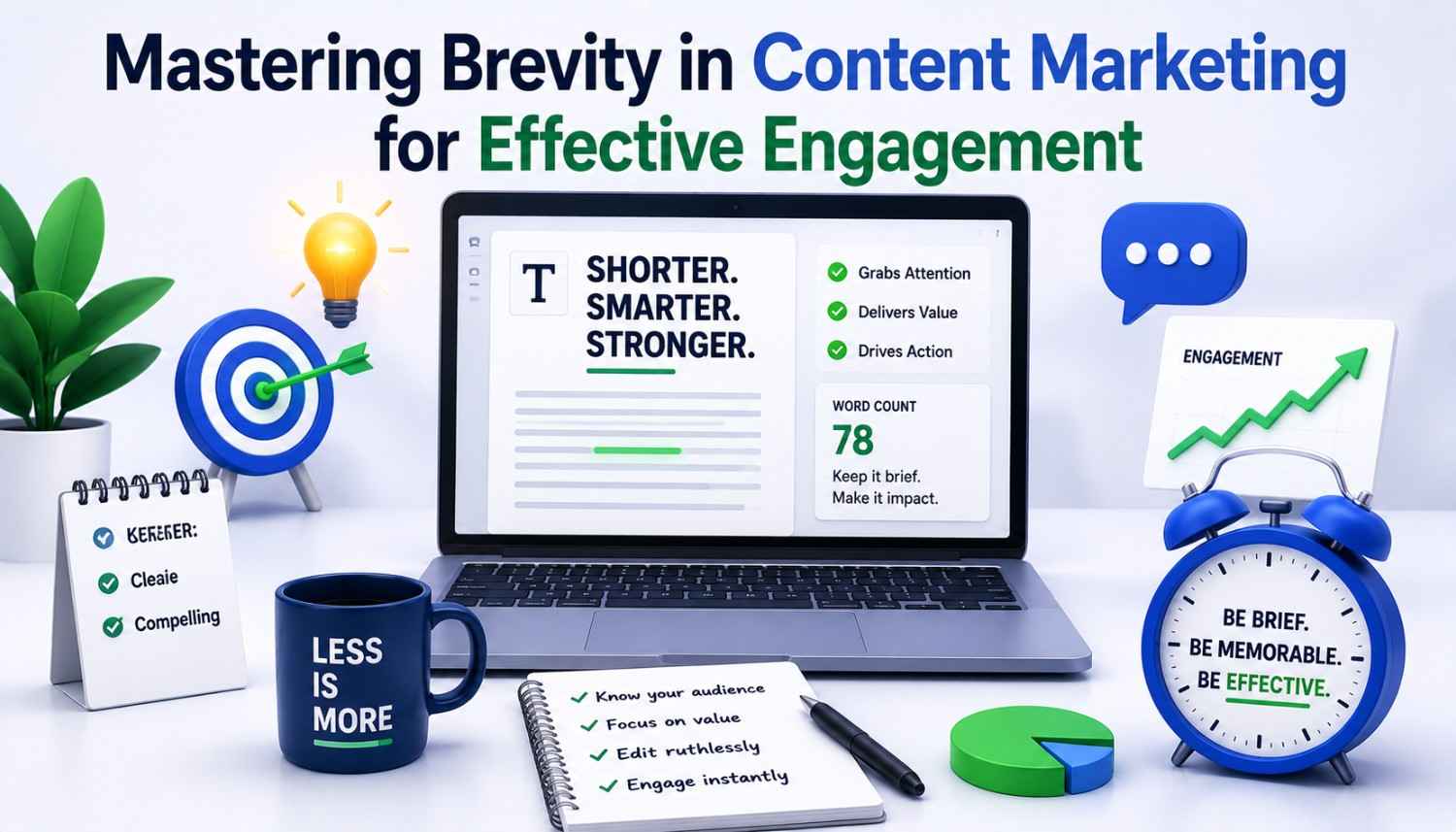
As a content writer, one of the most significant challenges is conveying the desired message in a single piece, knowing that there’s no guarantee anyone will read it. The world of content marketing is vast, and with the increasing competition from AI-generated content, it’s getting harder to make our message stick. However, the answer lies in mastering the art of brevity, which can help us cut through the noise and engage our audience effectively.
The Importance of Brevity in Content Marketing
Concise content is the key to achieving our primary goal as content marketers, which is to engage our audience and convey our message effectively. We live in an attention economy, where human attention is a scarce and valuable commodity. The average human attention span is now just 8.25 seconds, down from 12 seconds in 2000. Every word needs to count, and concise content respects our readers’ time, making it more likely they’ll engage with our message.
The Benefits of Concise Content
- Concise content forces us to distill our ideas to their core, making complex concepts accessible to a wider audience.
- It improves the user experience and keeps our audience engaged, especially on mobile devices where shorter paragraphs with concise messaging are easier to read.
- Concise content is easier for search engines to pick up, which can boost our pages’ visibility in AI Overviews and featured citations.
For example, a simple bulleted list can make a significant difference in the engagement rate. A study found that content that is concise and to the point can improve engagement rates by up to 30%, which can help our SEO performance. This is why it’s essential to master the art of brevity in content marketing.
Identifying Areas for Concise Writing
As content marketers, we often struggle with wordiness in various areas of our content. Here are some key examples where we can improve our concise writing skills:
Headlines and Titles
The headline is often the first and sometimes the only thing a potential reader sees. A concise, compelling headline can make the difference between a click and a scroll-by. Try to keep things short and to the point, clearly conveying the value proposition to the reader.
- For example, a blog title like “How Working with a Third-Party CRO Team Can Support Your Business” clearly conveys the value proposition and is more direct than a clickbait-style title.
- A well-crafted headline should be attention-grabbing and informative, making it more likely for readers to engage with our content.
Social Media Posts
Social media is made for brevity, with character limits and users’ short attention spans. Each post should convey a complete thought or call-to-action in as few words as possible.
For example, a recent tweet from NP Digital reads: “Can AI really spot AI? The truth is Yes and no. Chad breaks down some of these nuances here, so save this one to refer to before your next content review it could save you some time. #AI #AIDetector #contentwriting #contentcreation #contentstrategypic.twitter.com/Bq7L1O8EII
Bullet Points and Lists
Bullet points and lists are an excellent way to present information concisely. A well-structured list can make complex information more accessible and easier to understand.
- A simple bulleted list can make a significant difference in the engagement rate, as seen in the example of a study that found that concise content can improve engagement rates by up to 30%.
- Lists can also help to break up long blocks of text and make our content more scannable, making it more likely for readers to engage with our message.
Conclusion
In conclusion, mastering the art of brevity is essential for content marketers who want to cut through the noise and engage their audience effectively. By identifying areas for concise writing and implementing these changes, we can improve our content’s engagement rate and SEO performance.
Key Takeaways
- Concise content is the key to achieving our primary goal as content marketers.
- Concise content forces us to distill our ideas to their core, making complex concepts accessible to a wider audience.
- Concise content improves the user experience and keeps our audience engaged, especially on mobile devices.
- Concise content is easier for search engines to pick up, which can boost our pages’ visibility in AI Overviews and featured citations.
Frequently Asked Questions (FAQs)
What is concise content?
Concise content is the art of conveying a message in a few words, making it easier for readers to understand and engage with our content.
How can I improve my concise writing skills?
Identify areas where you can improve your concise writing skills, such as headlines, social media posts, and bullet points. Practice using concise language and structure to make your content more engaging and accessible.
What are the benefits of concise content?
Concise content can improve engagement rates, increase SEO performance, and make complex information more accessible to a wider audience.
How can I measure the effectiveness of concise content?
Use metrics such as engagement rates, click-through rates, and SEO performance to measure the effectiveness of concise content. Adjust your strategy based on the data to continually improve your content’s quality and engagement.