Imagine having a treasure trove of content that you’ve already created, but it’s just collecting dust on your blog or website. You’re eager to share it with your audience, but you don’t have the time or resources to create entirely new content. That’s where content repurposing comes in – a game-changing strategy that breathing new life into your existing content and helps you reach new audiences. In this article, we’ll explore what content repurposing is, why it’s so powerful, and how to do it effectively.
The Power of Content Repurposing
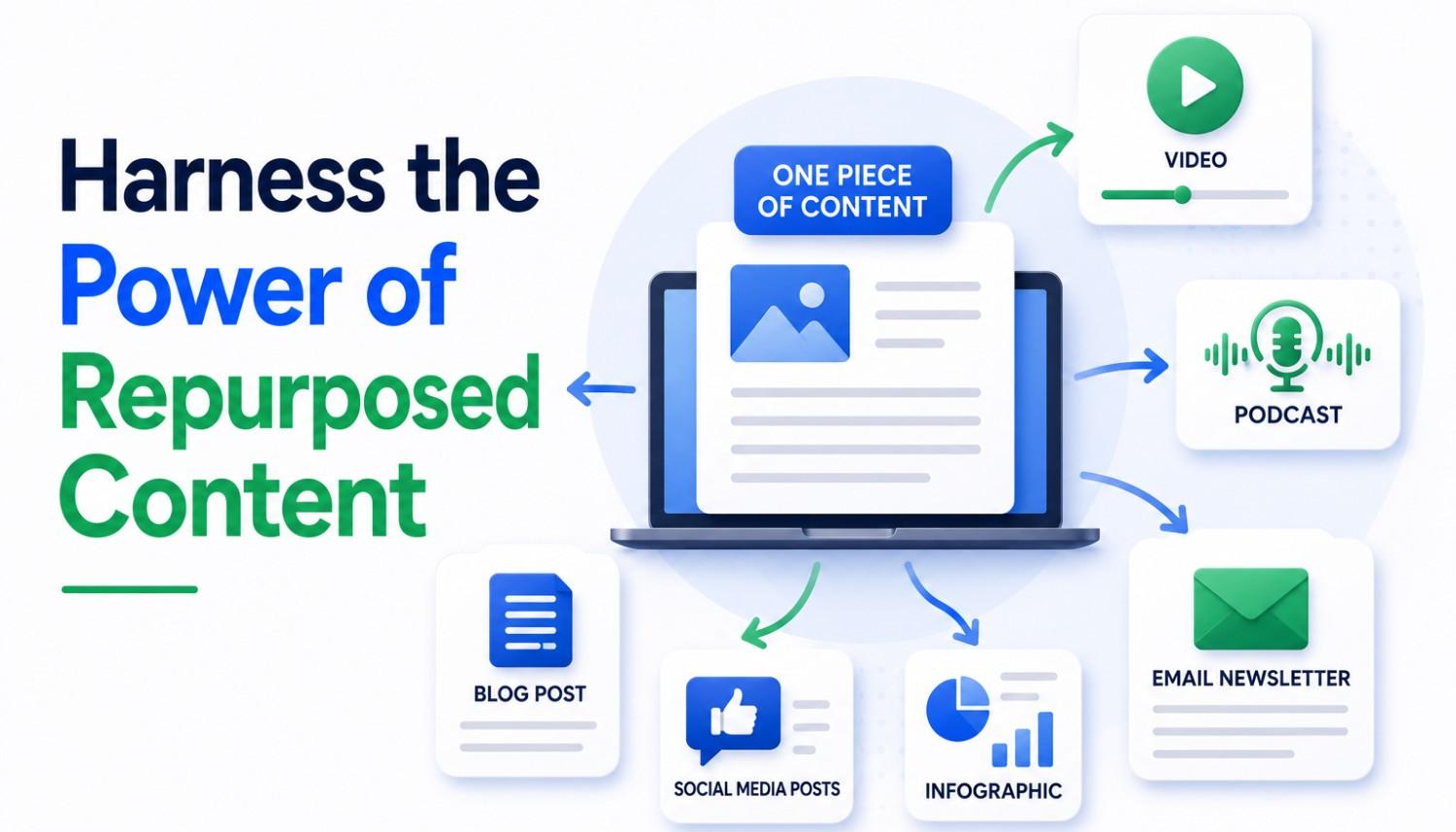
Content repurposing, also known as content recycling, is the practice of reusing and reformatting an existing piece of content for a new platform. This could be a blog post, video, podcast, or even a social media post. The idea is to take your existing content and adapt it to fit the unique characteristics of a new platform, making it fresh and engaging for your audience.
Why Content Repurposing is a Game-Changer
- Content repurposing saves you time and resources by allowing you to reuse existing content instead of creating new content from scratch.
- It helps you reach new audiences by adapting your content to fit different platforms and formats.
- Repurposing content can increase engagement and conversions by providing your audience with fresh and relevant content.
- It’s a great way to breathe new life into old content, reducing the risk of content fatigue and keeping your audience engaged.
- Content repurposing can also help you scale your content production efforts, making it easier to meet your publishing schedule and satisfy your audience’s craving for content.
How to Repurpose Content
Repurposing content involves adapting your existing content to fit a new platform or format. This can involve breaking down a large piece of content into smaller, bite-sized chunks, or transforming a written article into a video or audio format. The key is to keep your content concise, engaging, and relevant to your audience.
Breaking Down Large Content
One strategy for repurposing content is to break down a large piece of content, such as a whitepaper or e-book, into smaller, manageable chunks. This can be done by extracting key takeaways, statistics, or quotes from the original content and presenting them in a new format, such as a social media post or a podcast episode.
- Break down a long-form blog post into a series of shorter, more focused articles.
- Extract key statistics or data from a whitepaper and present them in a visually appealing infographic.
- Transform a written article into a video or audio format, using visuals or narration to bring the content to life.
Adapting Content to Different Platforms
Repurposing content also involves adapting your existing content to fit different platforms and formats. This can involve changing the tone, language, or style of your content to suit the unique characteristics of a new platform.
Translating Written Content into Video
One way to adapt written content for video is to use a combination of visuals, narration, and animation to bring the content to life. This can involve using a screen recording software to capture the content, adding text overlays or animations to highlight key points, and using a voiceover to narrate the content.
- Use a screen recording software to capture the content, such as Camtasia or ScreenFlow.
- Add text overlays or animations to highlight key points, using tools like Adobe After Effects or Powtoon.
- Use a voiceover to narrate the content, either using a microphone or a text-to-speech software.
Benefits of Content Repurposing
Content repurposing offers a range of benefits, from saving time and resources to increasing engagement and conversions. By repurposing content, you can:
- Extend the lifecycle of your content, making it fresh and relevant for longer.
- Reach new audiences and expand your content production efforts.
- Save time and resources by reusing existing content instead of creating new content from scratch.
- Increase engagement and conversions by providing your audience with fresh and relevant content.
- Reduce the risk of content fatigue and keep your audience engaged.
Conclusion
Content repurposing is a powerful strategy that can help you breathe new life into your existing content and reach new audiences. By breaking down large content, adapting content to different platforms, and reusing existing content, you can save time and resources while increasing engagement and conversions. Whether you’re a marketer, entrepreneur, or content creator, content repurposing is a must-know strategy that can help you take your content production efforts to the next level.
So, don’t let your existing content go to waste – repurpose it and take your content production efforts to the next level!
Key Takeaways
- Content repurposing is the practice of reusing and reformatting existing content for a new platform or format.
- Breaking down large content into smaller, manageable chunks can be an effective way to repurpose content.
- Adapting content to different platforms and formats can help you reach new audiences and increase engagement.
- Repurposing content can save time and resources while increasing engagement and conversions.
- Content repurposing is a must-know strategy for marketers, entrepreneurs, and content creators.
Frequently Asked Questions (FAQs)
What is content repurposing?
Content repurposing is the practice of reusing and reformatting existing content for a new platform or format.
How do I break down large content?
Breaking down large content involves extracting key takeaways, statistics, or quotes from the original content and presenting them in a new format, such as a social media post or a podcast episode.
Can I repurpose content without violating copyright laws?
Yes, you can repurpose content without violating copyright laws as long as you’re adapting the content for a new platform or format, and not simply copying and pasting the original content.
How can I increase engagement through content repurposing?
To increase engagement through content repurposing, focus on creating content that’s fresh, relevant, and engaging for your audience. Use visuals, storytelling, and other techniques to bring the content to life and capture your audience’s attention.