.single-post .entry-content h2::before,
.single-post .entry-content h2::after,
.single-post .post-content h2::before,
.single-post .post-content h2::after,
.single-post article h2::before,
.single-post article h2::after,
.entry-content h2::before,
.entry-content h2::after,
.post-content h2::before,
.post-content h2::after,
article h2::before,
article h2::after {
content: none !important;
display: none !important;
width: 0 !important;
height: 0 !important;
border: 0 !important;
background: none !important;
}
.marastu-faq {
margin-top: 8px !important;
}
.marastu-faq details.marastu-faq-item {
margin: 0 0 8px 0 !important;
padding: 0 !important;
border: 0 !important;
background: transparent !important;
}
.marastu-faq summary {
cursor: pointer !important;
list-style: none !important;
font-size: 1.05rem !important;
line-height: 1.35 !important;
font-weight: 700 !important;
color: #111827 !important;
}
.marastu-faq summary::-webkit-details-marker {
display: none !important;
}
.marastu-faq summary::before {
content: "\25B8";
display: inline-block;
margin-right: 8px;
font-size: 0.85rem;
color: #111827;
}
.marastu-faq details[open] summary::before {
content: "\25BE";
}
.marastu-faq p {
margin: 8px 0 14px 22px !important;
font-size: 1rem !important;
line-height: 1.7 !important;
color: #374151 !important;
font-weight: 400 !important;
}
Discover how Google search is evolving to meet changing user behavior and what it means for modern SEO strategies. Explore the latest developments and implications for your digital marketing approach.
The conversation about the future of Google search is getting louder across the marketing industry, and it’s hard to ignore. The Google interface has shifted from a simple list of links to a crowded knowledge dashboard. Users today must navigate past ads, AI summaries, videos, and map packs before encountering a traditional organic result. This shift has sparked debate over whether organic search is being squeezed out by paid placements, AI-generated summaries, and Google-owned features.
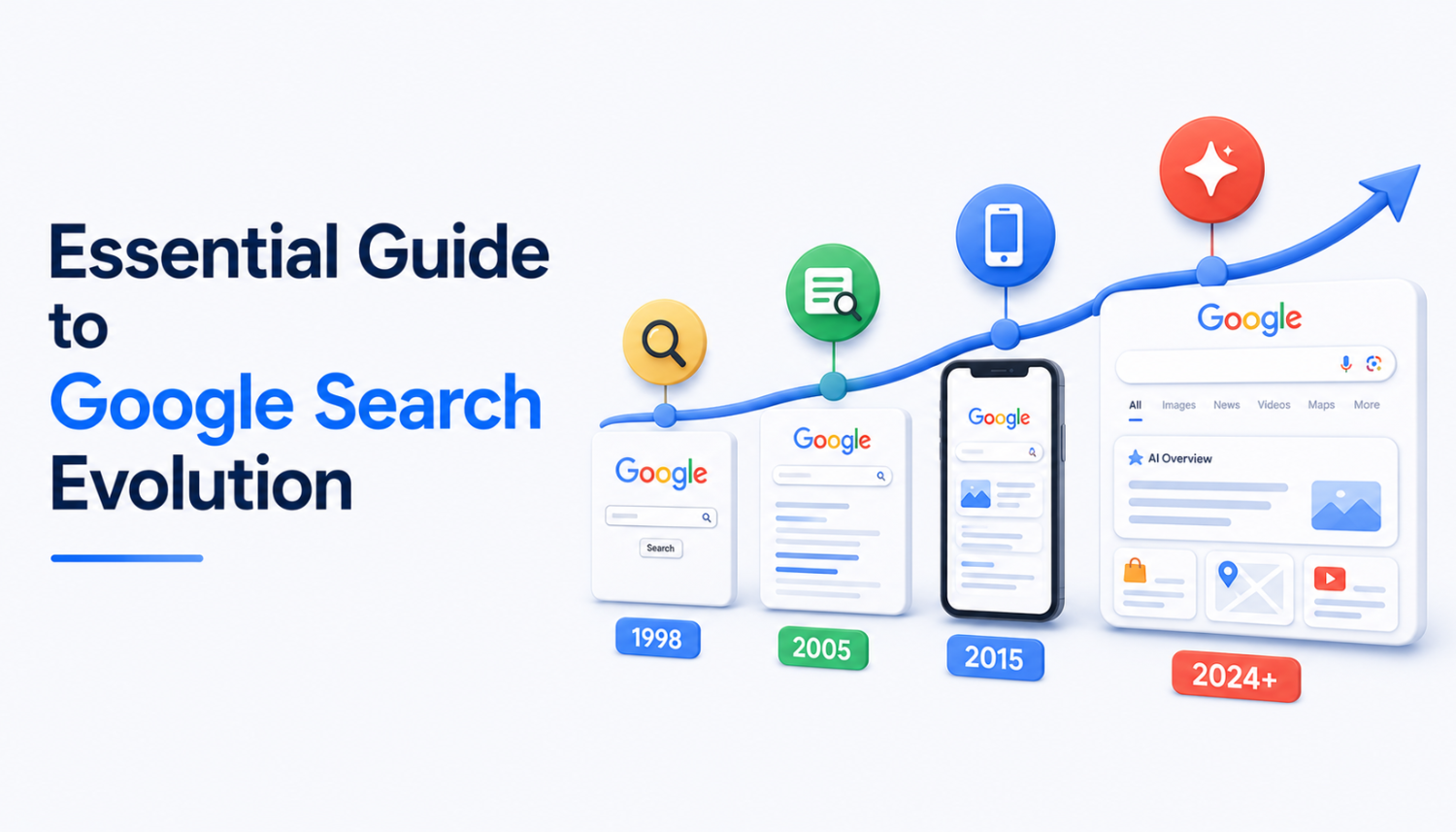
However, to suggest SEO is entering a pay-to-compete era misses something important. What we’re witnessing isn’t the collapse of organic search; it’s the evolution in how people search. Understanding this difference matters. Google’s results page has been evolving gradually for more than a decade through a process of continual experimentation. Each of these changes altered how people interact with search platforms.
The result is that search has shifted from a list of links into something closer to a layered information environment, where different formats compete for attention and engagement. For many years, SEO success was largely defined by a simple objective: rank first and capture the click. Today, that single ranking no longer stands alone. Depending on the query, it can sit among a crowded mix of AI-generated summaries, paid search placements, map listings, product results, discussion forums, and video results, all competing for the user’s attention.
This guide will cover the latest developments in Google search, the evolution of search behavior, and the implications for modern SEO strategies.
The Evolution of Google Search
The Google search results page has undergone significant changes over the years, with each update altering how users interact with search platforms. The introduction of AI-generated summaries, conversational search features, and the growth of paid search placements have forced marketers to rethink their approach to SEO.
From Search to Answer Engine
Google’s results page has shifted from a simple list of links to a comprehensive knowledge dashboard. This change has led to a decline in click-through rates, as users increasingly rely on AI-generated summaries and other Google-owned features to find answers. The result is that search has become more about providing answers than directing users to websites.
- Marketers must adapt to a new search landscape where answers, not websites, are the primary goal.
- Understanding user behavior and preferences is crucial to developing effective SEO strategies in this new environment.
- Google’s AI-generated summaries and other tools are becoming increasingly sophisticated, requiring marketers to be more strategic in their approach to SEO.
The Rise of AI-Generated Summaries
AI-generated summaries have become a staple of Google’s results page, providing users with concise and accurate answers to their queries. This feature has led to a decline in click-through rates, as users rely on AI-generated summaries to find answers. The implications for marketers are significant, as they must adapt to a new search landscape where answers, not websites, are the primary goal.
The Importance of Position Zero
Position zero, also known as the featured snippet, has become a highly sought-after spot on Google’s results page. This position is reserved for the most accurate and relevant answer to a user’s query, and it has a significant impact on click-through rates. Marketers must focus on optimizing their content to appear in position zero, as it provides a significant advantage in the search results.
- Optimizing content for position zero requires a deep understanding of user behavior and preferences.
- Marketers must focus on creating high-quality, accurate, and concise content that meets the needs of their target audience.
- Using structured data and schema markup can help improve the chances of appearing in position zero.
The Impact of Paid Search Placements
Paid search placements have become increasingly prominent on Google’s results page, with many users relying on paid ads to find the information they need. While paid search can be effective, it also presents a challenge for marketers, as it can be difficult to stand out in a crowded market.
The Importance of Ad Extensions
Ad extensions have become a crucial component of paid search campaigns, providing users with additional information about the ad and increasing the chances of a click-through. Marketers must focus on creating effective ad extensions that meet the needs of their target audience.
- Using ad extensions can increase the chances of a click-through and drive more traffic to the website.
- Marketers must focus on creating high-quality, relevant, and concise ad extensions that meet the needs of their target audience.
- Using ad extensions with a strong call-to-action (CTA) can improve the chances of driving conversions.
The Role of Mobile Search
Mobile search has become increasingly prominent, with many users relying on their mobile devices to find information. Marketers must focus on creating a mobile-friendly website and optimizing their content for mobile search.
The Importance of Mobile-Friendly Content
Mobile-friendly content is crucial for driving traffic and conversions, as it provides users with a seamless and enjoyable experience. Marketers must focus on creating high-quality, concise, and relevant content that meets the needs of their target audience.
- Creating mobile-friendly content can improve the chances of driving traffic and conversions.
- Marketers must focus on creating high-quality, concise, and relevant content that meets the needs of their target audience.
- Using mobile-friendly content can improve the chances of appearing in position zero.
Conclusion
The future of Google search is rapidly evolving, with AI-generated summaries, paid search placements, and mobile search becoming increasingly prominent. Marketers must adapt to this new landscape by focusing on creating high-quality, concise, and relevant content that meets the needs of their target audience. By understanding user behavior and preferences, marketers can develop effective SEO strategies that drive traffic and conversions.
Key Takeaways
- Marketers must adapt to a new search landscape where answers, not websites, are the primary goal.
- Understanding user behavior and preferences is crucial to developing effective SEO strategies in this new environment.
- Google’s AI-generated summaries and other tools are becoming increasingly sophisticated, requiring marketers to be more strategic in their approach to SEO.
- Creating mobile-friendly content can improve the chances of driving traffic and conversions.
- Marketers must focus on creating high-quality, concise, and relevant content that meets the needs of their target audience.
Frequently Asked Questions (FAQs)
What is the future of Google search?
The future of Google search is rapidly evolving, with AI-generated summaries, paid search placements, and mobile search becoming increasingly prominent. Marketers must adapt to this new landscape by focusing on creating high-quality, concise, and relevant content that meets the needs of their target audience.
How can I improve my click-through rates?
Improving click-through rates requires a deep understanding of user behavior and preferences. Marketers must focus on creating high-quality, concise, and relevant content that meets the needs of their target audience. Using ad extensions and structured data can also improve the chances of driving traffic and conversions.
What is the importance of mobile-friendly content?
Mobile-friendly content is crucial for driving traffic and conversions, as it provides users with a seamless and enjoyable experience. Marketers must focus on creating high-quality, concise, and relevant content that meets the needs of their target audience.
How can I appear in position zero?
Appearing in position zero requires a deep understanding of user behavior and preferences. Marketers must focus on creating high-quality, concise, and relevant content that meets the needs of their target audience. Using structured data and schema markup can also improve the chances of appearing in position zero.