The dynamic duo of digital marketing: SEO and PPC. While often seen as separate entities, these two strategies can work together in perfect harmony to drive business success. In this article, we’ll delve into the world of SEO and PPC, exploring their similarities and differences, and how combining them can lead to a digital marketing double whammy.
Think of SEO and PPC like Spongebob and Patrick, Batman and Robin, or Tom and Jerry – iconic duos that are greater than the sum of their parts. Each pair brings unique strengths and weaknesses, but together, they create an unbeatable team. Similarly, SEO and PPC can be seen as two complementary strategies that, when combined, provide a powerful one-two punch for digital marketing.
So, why is it that many businesses still view SEO and PPC as separate entities? Perhaps it’s because they’ve been led to believe that they need to choose between one or the other. But, the truth is, a successful digital marketing strategy should never be a one-size-fits-all approach. By combining SEO and PPC, businesses can unlock the full potential of their digital marketing efforts and achieve their goals more efficiently.
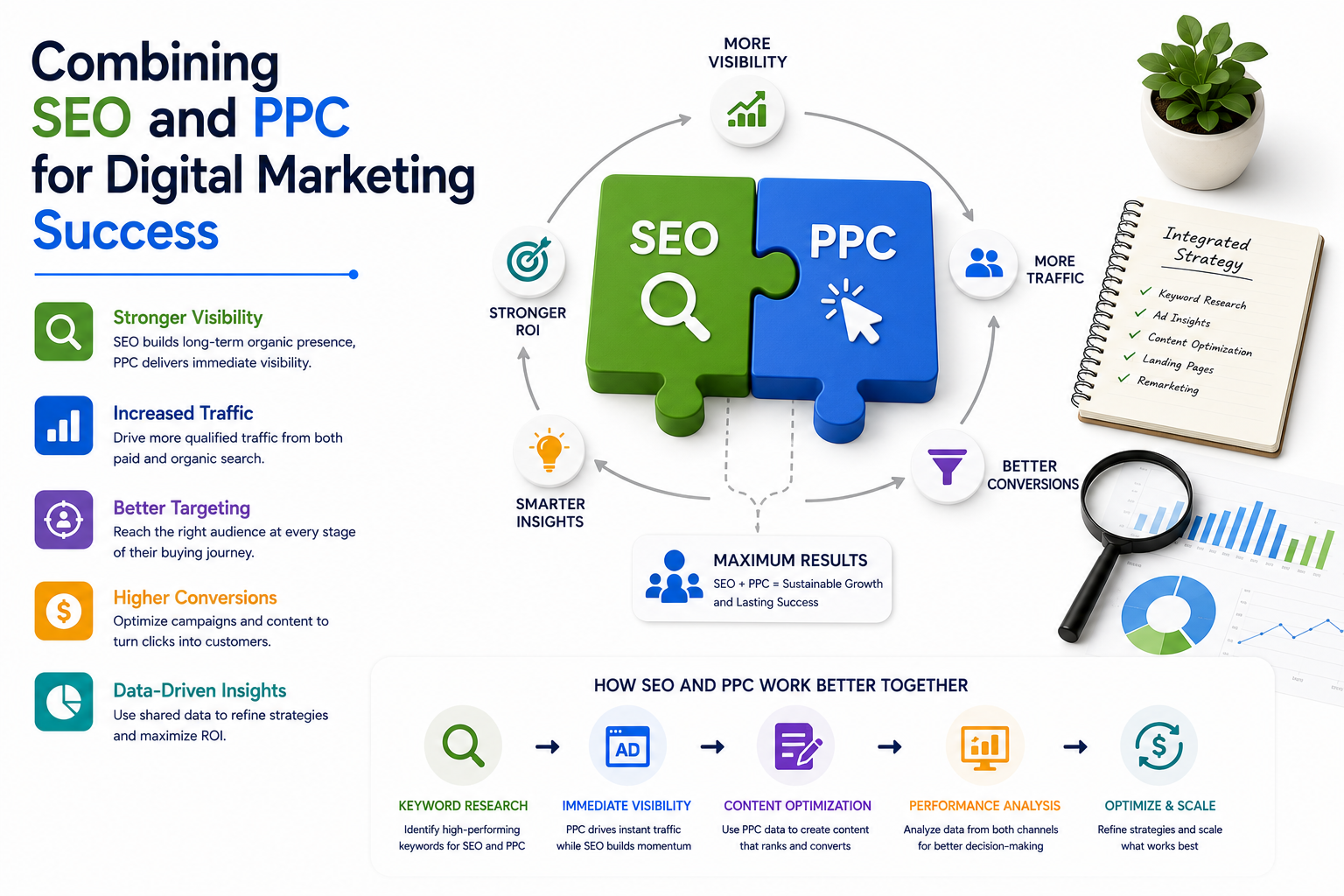
The Benefits of Combining SEO and PPC
When used together, SEO and PPC can bring a range of benefits, including:
- Improved search engine rankings and visibility, thanks to the combination of organic and paid efforts.
- Increased website traffic and engagement, as a result of the increased visibility and relevance.
- Enhanced brand awareness and credibility, as a result of the consistent and targeted messaging.
- Increased conversions and sales, as a result of the targeted and relevant advertising.
- Better ROI and cost-effectiveness, as a result of the optimized and targeted advertising efforts.
Similarities Between SEO and PPC
While SEO and PPC may seem like two different beasts, they do share some similarities. Both strategies rely on targeted keywords and user intent to drive results. Additionally, both SEO and PPC require a deep understanding of the target audience and their needs.
- Both SEO and PPC rely on targeted keywords to drive results, whether it’s through organic or paid means.
- Both strategies require a deep understanding of the target audience and their needs, in order to create relevant and effective content.
- Both SEO and PPC require ongoing optimization and refinement, in order to stay ahead of the competition and achieve optimal results.
Differences Between SEO and PPC
While SEO and PPC share some similarities, they also have some key differences. For example, SEO takes longer to produce results, but can provide long-term benefits, whereas PPC can provide immediate results, but may require ongoing payments.
- SEO takes longer to produce results, but can provide long-term benefits, such as increased search engine rankings and visibility.
- PPC can provide immediate results, but may require ongoing payments, such as ad spend and campaign management.
- SEO requires ongoing optimization and refinement, in order to stay ahead of the competition, whereas PPC can be more of a ‘set it and forget it’ strategy.
Measuring ROI for SEO and PPC
Measuring the return on investment (ROI) for SEO and PPC can be a complex task, but it’s essential to understand the effectiveness of each strategy. To measure ROI, businesses can use a variety of metrics, including:
- Conversion rates and sales.
- Cost per acquisition (CPA) and cost per click (CPC).
- Return on ad spend (ROAS) and return on investment (ROI).
- Organic traffic and engagement metrics, such as time on site and bounce rate.
Keyword Research for SEO and PPC
Keyword research is a critical component of both SEO and PPC. To ensure that businesses are targeting the right keywords, they should focus on:
- User intent and search demand, in order to create relevant and effective content.
- Long-tail keywords, which can help to increase relevance and reduce competition.
- Keyword clustering, which can help to identify patterns and relationships between keywords.
- Keyword tooling, such as Google Keyword Planner and , to help identify and analyze keywords.
Conclusion
In conclusion, SEO and PPC are two complementary strategies that can work together in perfect harmony to drive business success. By understanding the similarities and differences between the two, businesses can create a comprehensive digital marketing strategy that meets their unique needs and goals.
Whether you’re just starting out with SEO and PPC, or you’re looking to take your existing strategy to the next level, remember to always focus on the user intent and search demand. By doing so, you’ll be well on your way to creating a digital marketing double whammy that drives real results.
Key Takeaways
- SEO and PPC are two complementary strategies that can work together in perfect harmony to drive business success.
- The key to success lies in understanding the user intent and search demand, in order to create relevant and effective content.
- SEO takes longer to produce results, but can provide long-term benefits, such as increased search engine rankings and visibility.
- PPC can provide immediate results, but may require ongoing payments, such as ad spend and campaign management.
- Measuring ROI for SEO and PPC can be a complex task, but it’s essential to understand the effectiveness of each strategy.
Frequently Asked Questions (FAQs)
What is the difference between SEO and PPC?
SEO stands for ‘search engine optimization,’ which is the process of improving the visibility and ranking of a website in search engine results pages (SERPs) through organic means. PPC stands for ‘pay-per-click,’ which is a form of digital advertising where businesses pay for each click on their ads.
How do I measure the ROI of SEO and PPC?
Measuring the ROI of SEO and PPC can be a complex task, but it’s essential to understand the effectiveness of each strategy. To measure ROI, businesses can use a variety of metrics, including conversion rates, cost per acquisition (CPA), and return on ad spend (ROAS).
What is keyword research and why is it important?
Keyword research is the process of identifying and analyzing keywords and phrases that are relevant to a business’s products or services. It’s essential to conduct keyword research to ensure that businesses are targeting the right keywords and creating relevant and effective content.
Can I use SEO and PPC together?
Yes, SEO and PPC can be used together to drive business success. In fact, many businesses find that combining SEO and PPC provides a powerful one-two punch that drives real results.