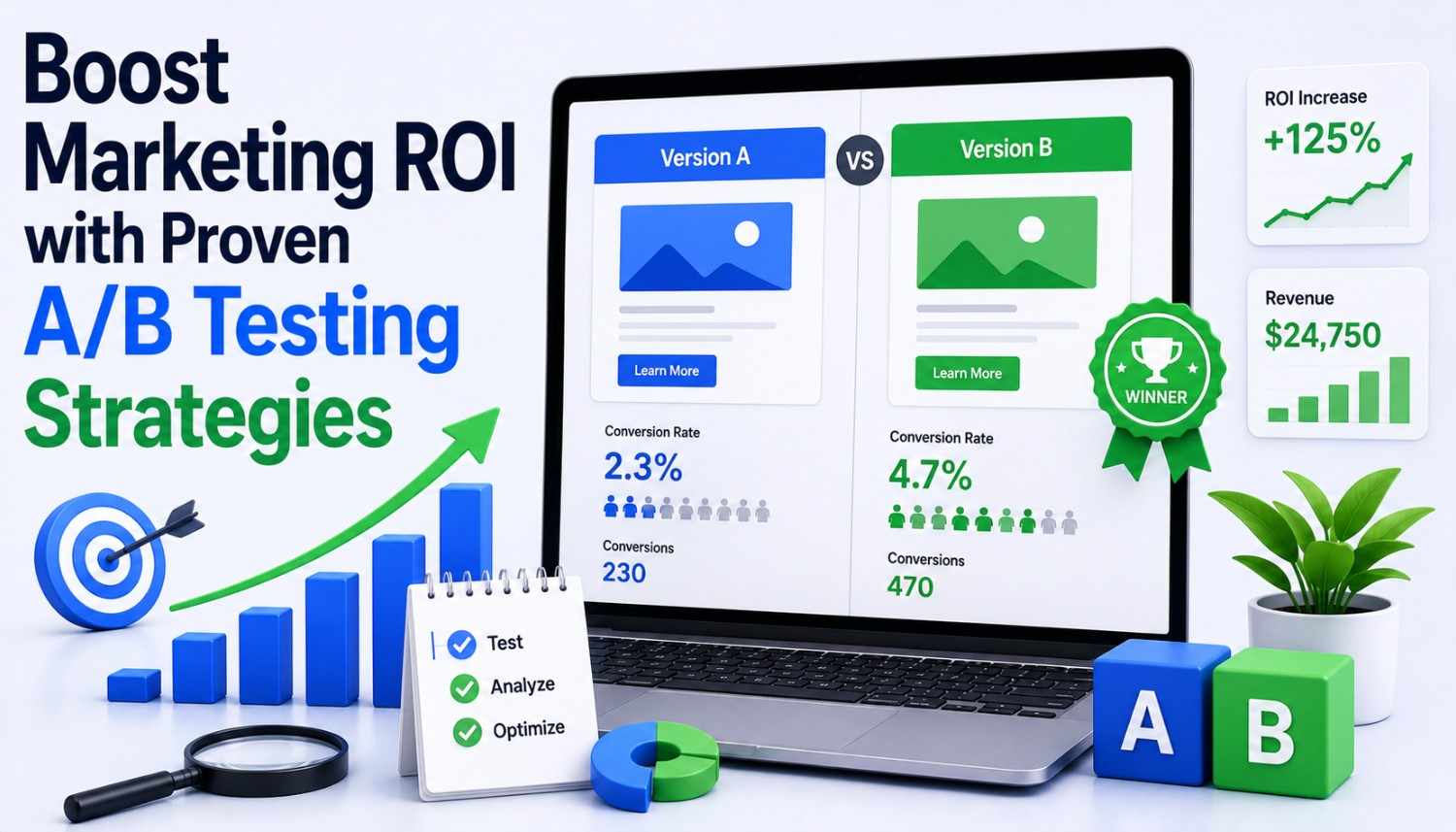
In today’s digital landscape, creating effective marketing campaigns can be a daunting task, even with extensive research. Despite thorough analysis, not every campaign will yield positive results, which is why A/B testing is a valuable method for determining the most effective online promotional and marketing strategies for your business. This technique can be applied to various elements, including website copy, sales emails, and social media content, allowing you to identify the best-performing version of your campaign before investing a significant portion of your budget in marketing materials that may not work. A/B testing can be time-consuming, but its benefits make it worthwhile, as it enables you to refine your marketing efforts and create a stronger return on investment.
The Importance of A/B Testing in Marketing
A/B testing, also known as split testing, is a marketing strategy that involves comparing two versions of a website, advert, email, popup, or landing page to see which one performs better. By testing different elements, such as headlines, images, or calls-to-action, you can determine which version drives more conversions, whether it’s sign-ups, purchases, or engagement. This approach provides valuable insights into your target audience’s preferences and behavior, enabling you to refine your marketing strategies and optimize your budget.
Benefits of A/B Testing
A/B testing offers numerous benefits, including:
- Improved return on investment: By identifying the most effective marketing strategies, you can allocate your budget more efficiently and increase your return on investment.
- Increased conversions: A/B testing enables you to optimize your website, emails, and social media content to drive more conversions, whether it’s sign-ups, purchases, or engagement.
- Enhanced customer experience: By understanding your target audience’s preferences and behavior, you can create a more personalized and engaging experience, leading to increased customer satisfaction and loyalty.
- Reduced risk: A/B testing allows you to test different marketing strategies and elements before investing a significant portion of your budget, reducing the risk of failure.
- Data-driven decision-making: A/B testing provides empirical evidence to inform your marketing decisions, enabling you to create data-driven campaigns that drive results.
- Competitive advantage: By staying ahead of the curve and continuously refining your marketing strategies, you can gain a competitive advantage in your industry.
How A/B Testing Works
A/B testing involves randomly showing two versions of the same asset (ad, website, pop-up, offer, etc.) to different users. The random part is crucial, as it provides more accurate information without skewing the results. One version is the control group, or the version already in use, while the second version changes a single element. By testing different elements, you can determine which version performs better.
Types of A/B Testing
There are several types of A/B testing, including:
- On-site testing: This type of testing involves testing different elements on your website, such as headlines, images, or calls-to-action.
- Off-site testing: This type of testing involves testing different elements in off-site channels, such as social media, email, or advertising.
- Multi-variant testing: This type of testing involves testing multiple elements simultaneously to determine which combination performs best.
A/B Testing Tools
There are numerous A/B testing tools available, including:
- Optimizely: A cloud-based A/B testing and personalization platform.
- Unbounce: A cloud-based landing page and conversion optimization platform.
- VWO: A cloud-based A/B testing and personalization platform.
Best Practices for A/B Testing
To ensure the success of your A/B testing efforts, follow these best practices:
- Set clear goals and objectives: Define what you want to achieve with your A/B testing efforts.
- Choose the right metrics: Select the metrics that matter most to your business, such as conversions or revenue.
- Keep it simple: Start with small, incremental changes to avoid overwhelming your audience.
- Analyze and learn: Take the time to analyze your results and learn from your successes and failures.
Conclusion
A/B testing is a powerful marketing strategy that allows you to refine your marketing efforts and create a stronger return on investment. By understanding your target audience’s preferences and behavior, you can create a more personalized and engaging experience, leading to increased customer satisfaction and loyalty. Remember to set clear goals and objectives, choose the right metrics, keep it simple, and analyze and learn from your results to ensure the success of your A/B testing efforts.
By incorporating A/B testing into your marketing strategy, you can stay ahead of the curve and gain a competitive advantage in your industry.
Key Takeaways
- A/B testing is a marketing strategy that involves comparing two versions of a website, advert, email, popup, or landing page to see which one performs better.
- A/B testing can help you improve your return on investment, increase conversions, enhance customer experience, reduce risk, and make data-driven decisions.
- There are several types of A/B testing, including on-site testing, off-site testing, and multi-variant testing.
- There are numerous A/B testing tools available, including Optimizely, Unbounce, and VWO.
- To ensure the success of your A/B testing efforts, follow best practices such as setting clear goals and objectives, choosing the right metrics, keeping it simple, and analyzing and learning from your results.
Frequently Asked Questions (FAQs)
What is A/B testing?
A/B testing is a marketing strategy that involves comparing two versions of a website, advert, email, popup, or landing page to see which one performs better.
What are the benefits of A/B testing?
A/B testing can help you improve your return on investment, increase conversions, enhance customer experience, reduce risk, and make data-driven decisions.
What are the different types of A/B testing?
There are several types of A/B testing, including on-site testing, off-site testing, and multi-variant testing.
What are some popular A/B testing tools?
Some popular A/B testing tools include Optimizely, Unbounce, and VWO.
How can I get started with A/B testing?
To get started with A/B testing, set clear goals and objectives, choose the right metrics, keep it simple, and analyze and learn from your results.