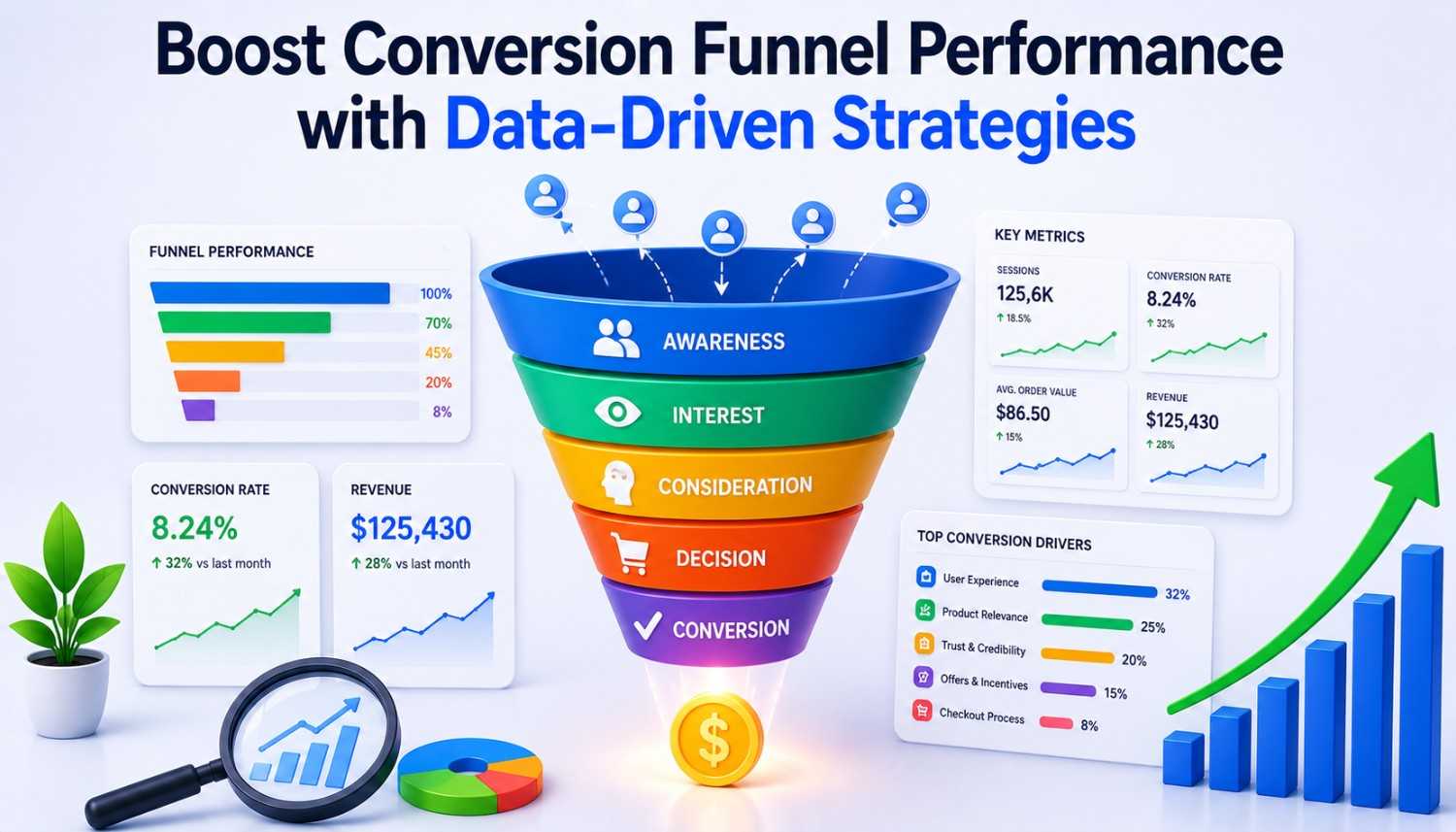
Creating a conversion funnel is a crucial step in driving sales and revenue for any business. However, even with a well-designed funnel, there are often roadblocks that prevent conversions from happening. If you’ve created a funnel but it’s not working as expected, it’s time to rethink your strategy and optimize your conversion funnel for better results.
Optimizing a conversion funnel requires a data-driven approach, and that’s where analytics comes in. By setting up goals in Google Analytics, you can track user behavior and identify areas where your funnel is leaking conversions. This information will help you pinpoint the exact pages or elements that are causing users to abandon their journey.
Setting Up Goals in Google Analytics
To start optimizing your conversion funnel, you need to set up goals in Google Analytics. This will allow you to track user behavior and identify areas where your funnel is leaking conversions. You can use a goal template, smart goal, or create your own custom goal to track specific actions on your website.
- To create a goal in Google Analytics, navigate to the Admin section and click on Goals. From there, follow the prompts to set up your goal, including the goal name, description, and tracking settings.
- Make sure to select the correct goal type, such as destination, event, or duration, depending on the type of action you want to track. For example, if you want to track when a user completes a purchase, you would select the destination goal type.
- Configure the goal settings, including the goal name, description, and tracking settings. You can also set up custom variables to track additional information about the user’s behavior.
Identifying Leaky Areas in Your Funnel
Once you have goals set up in Google Analytics, you can start tracking user behavior and identifying areas where your funnel is leaking conversions. Look for pages or elements that have a high bounce rate, long time on page, or low conversion rates.
- Use the funnel visualization tool in Google Analytics to see how users are navigating through your funnel. This will help you identify areas where users are dropping off or getting stuck.
- Use the event tracking feature in Google Analytics to track specific actions on your website, such as form submissions or button clicks. This will help you identify areas where users are interacting with your funnel.
- Use the behavior flow report in Google Analytics to see how users are navigating through your website. This will help you identify areas where users are dropping off or getting stuck.
Optimizing Your Landing Page
When it comes to optimizing your conversion funnel, the landing page is one of the most critical areas to focus on. A well-designed landing page can make all the difference in driving conversions. Here are some key elements to test on your landing page:
- Headline: Test different headlines to see which one resonates best with your audience. Use action-oriented language and make sure the headline clearly communicates the value proposition of your product or service.
- Image: Test different images to see which one is most effective at grabbing attention. Use high-quality images that are relevant to your product or service.
- Call-to-Action (CTA): Test different CTAs to see which one is most effective at driving conversions. Use clear and concise language and make sure the CTA stands out on the page.
- Form Fields: Test different form fields to see which ones are most effective at capturing leads. Use minimal form fields and make sure they are clear and concise.
Optimizing Your Sign-up Forms
Sign-up forms are another critical area to focus on when it comes to optimizing your conversion funnel. A well-designed sign-up form can make all the difference in driving conversions. Here are some key elements to test on your sign-up forms:
- Trust Elements: Test different trust elements to see which ones are most effective at building credibility. Use reviews, ratings, and security badges to demonstrate trust.
- Form Fields: Test different form fields to see which ones are most effective at capturing leads. Use minimal form fields and make sure they are clear and concise.
- CTA: Test different CTAs to see which one is most effective at driving conversions. Use clear and concise language and make sure the CTA stands out on the page.
Optimizing Your Email Newsletters
Email newsletters are a critical component of any conversion funnel. A well-designed email newsletter can make all the difference in driving conversions. Here are some key elements to test on your email newsletters:
- Subject Line: Test different subject lines to see which one is most effective at grabbing attention. Use action-oriented language and make sure the subject line clearly communicates the value proposition of your product or service.
- Content: Test different content to see which one is most effective at driving conversions. Use clear and concise language and make sure the content is relevant to your audience.
- CTA: Test different CTAs to see which one is most effective at driving conversions. Use clear and concise language and make sure the CTA stands out on the page.
Testing and Analytics
Testing and analytics are critical components of any conversion funnel optimization strategy. Here are some key tools and techniques to use:
- A/B Testing: Use A/B testing to compare different versions of your landing page, sign-up form, or email newsletter. This will help you identify which elements are most effective at driving conversions.
- Usability Testing: Use usability testing to identify areas where users are getting stuck or dropping off. This will help you identify areas where you need to improve your funnel.
- Google Analytics: Use Google Analytics to track user behavior and identify areas where your funnel is leaking conversions. This will help you pinpoint the exact pages or elements that are causing users to abandon their journey.
Conclusion
Optimizing your conversion funnel is a crucial step in driving sales and revenue for any business. By following the steps outlined in this article, you can identify areas where your funnel is leaking conversions and make data-driven decisions to improve your funnel.
Remember, optimization is an ongoing process that requires continuous testing and analysis. By staying on top of your funnel and making data-driven decisions, you can drive more conversions and grow your business.
Key Takeaways
- Setting up goals in Google Analytics is crucial for tracking user behavior and identifying areas where your funnel is leaking conversions.
- Optimizing your landing page, sign-up form, and email newsletter are critical components of any conversion funnel optimization strategy.
- Testing and analytics are essential for making data-driven decisions and improving your funnel.
- Continuously testing and analyzing your funnel is necessary for driving more conversions and growing your business.
Frequently Asked Questions (FAQs)
What is conversion funnel optimization?
Conversion funnel optimization is the process of optimizing your website’s conversion funnel to drive more sales and revenue. This involves identifying areas where your funnel is leaking conversions and making data-driven decisions to improve your funnel.
How do I set up goals in Google Analytics?
To set up goals in Google Analytics, navigate to the Admin section and click on Goals. From there, follow the prompts to set up your goal, including the goal name, description, and tracking settings.
What are the most important elements to test on my landing page?
The most important elements to test on your landing page are your headline, image, call-to-action (CTA), and form fields. These elements can make or break your conversion rates, so it’s essential to test different versions to see which one is most effective.
What are the most effective ways to optimize my email newsletters?
The most effective ways to optimize your email newsletters are to test different subject lines, content, and CTAs. Use clear and concise language and make sure the content is relevant to your audience.
What tools and techniques can I use to test and analyze my funnel?
You can use A/B testing, usability testing, and Google Analytics to test and analyze your funnel. These tools will help you identify areas where your funnel is leaking conversions and make data-driven decisions to improve your funnel.