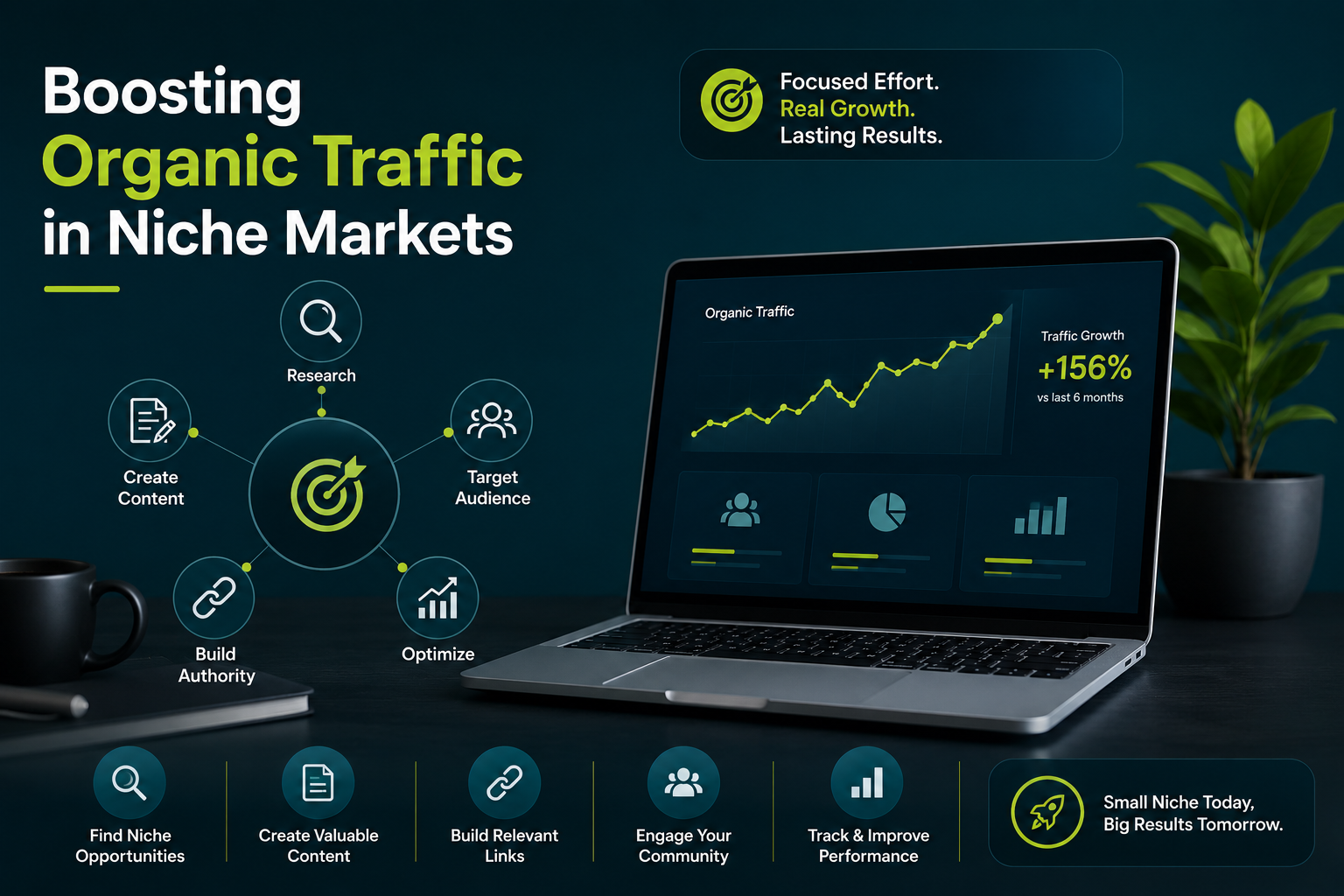
Are you a part of a niche market where your website’s traffic struggles to keep pace with the giants in the industry? It’s a common challenge many small businesses face, but it doesn’t have to be a recipe for disaster. By leveraging a smart content marketing strategy, you can still pull in organic traffic, even with a super-specific niche market. In this article, we’ll explore the world of niche SEO, what makes it unique, and provide you with actionable tips to boost your online presence.
So, what exactly is a niche market? A niche business caters to a specific group of customers with specialized needs, rather than trying to appeal to everyone. For instance, a software company that offers time tracking for billable hours or client management tools for professional service business owners is a niche player. This specialization allows them to focus on a specific area, build expertise, and create targeted content that resonates with their audience. However, it also presents a challenge when it comes to getting noticed online.
Niche SEO Challenges
One of the biggest hurdles in niche SEO is low search volume. When you’re targeting a very specific audience, there might not be a lot of people searching for your particular topic. However, this doesn’t mean you should give up hope. According to Brittany Werdowatz, an SEO Manager at NP Digital, creating valuable, in-depth content can help address the unique pain points of your target audience and rank for more keywords specific to your niche.
Keyword Research
When it comes to keyword research, it’s essential to understand your audience’s search behavior. Think about what they search for on the web, and use that information to optimize your keyword research. Here are some tips to get you started:
- Use tools like Ubersuggest, Google Keyword Planner, or SEMrush to find keywords with moderate search volume and low competition.
- Analyze your competitors’ content and see what keywords they’re targeting.
- Brainstorm related keywords that are more general and cover a broader topic.
Generalizing Your Keywords
Let’s say your focus keyword is “watercolor dog painting artist.” An Ubersuggest search reveals it has zero search volume. To overcome this, you need to generalize your keywords. Think about related keywords that cover a broader topic, such as “pet portraits” or “dog paintings.” These keywords have more search volume and can help you attract targeted traffic to your website.
Understanding Search Intent
When it comes to search intent, it’s essential to understand why people are searching for a particular keyword. Are they looking for answers, solutions, or something else? By understanding their intent, you can create content that resonates with them and meets their needs. For instance, if someone is searching for “dog painting,” they might be looking for inspiration, tutorials, or services.
Building Authority
Building authority in your niche market is crucial for niche SEO. It involves engaging with your audience, sharing valuable insights, and driving targeted traffic back to your website. Here are some ways to build authority:
- Participate in niche communities, forums, and social media groups.
- Share valuable content that addresses the unique pain points of your target audience.
- Engage with influencers and thought leaders in your niche.
Technical SEO
Technical SEO is also critical for niche SEO. It involves optimizing your website’s structure, content, and coding to improve its crawlability, indexability, and ranking potential. Here are some technical SEO tips:
- Ensure your website is mobile-friendly and has a responsive design.
- Use header tags (H1, H2, H3, etc.) to structure your content and improve readability.
- Optimize your images by compressing them, using descriptive alt tags, and specifying their size and format.
Backlink Strategy
A backlink strategy is essential for niche SEO. It involves acquiring high-quality backlinks from authoritative sources to improve your website’s authority and ranking potential. Here are some backlink tips:
- Research and identify authoritative sources in your niche.
- Reach out to these sources and propose collaboration or guest posting opportunities.
- Use tools like or SEMrush to track your backlinks and identify opportunities for improvement.
Measuring Success
Measuring success is crucial for any SEO strategy. It involves tracking key performance indicators (KPIs) such as website traffic, engagement, and conversion rates. Here are some KPIs to track:
- Website traffic: Use tools like Google Analytics to track your website’s traffic and engagement.
- Engagement: Track your website’s bounce rate, time on site, and pages per session.
- Conversion rates: Track your website’s conversion rates, including sales, leads, or sign-ups.
Conclusion
Niche SEO is a unique and challenging area of SEO that requires a deep understanding of your target audience, their search behavior, and the technical aspects of your website. By leveraging a smart content marketing strategy, generalizing your keywords, understanding search intent, building authority, and measuring success, you can overcome the challenges of niche SEO and attract targeted traffic to your website.
Remember, niche SEO is all about creating value for your audience and providing them with relevant, high-quality content that addresses their unique pain points. By doing so, you can establish yourself as an authority in your niche and attract a loyal following.
Key Takeaways
- Understand your target audience’s search behavior and preferences.
- Generalize your keywords to cover a broader topic and attract more traffic.
- Build authority by creating valuable content, engaging with your audience, and collaborating with influencers.
- Measure success by tracking key performance indicators (KPIs) such as website traffic, engagement, and conversion rates.
- Technical SEO is critical for niche SEO, so ensure your website is mobile-friendly, has a responsive design, and is optimized for crawlability and indexability.
- A backlink strategy is essential for niche SEO, so research and acquire high-quality backlinks from authoritative sources.
Frequently Asked Questions (FAQs)
What is niche SEO?
Niche SEO is a unique and challenging area of SEO that involves targeting a specific audience with specialized needs.
How do I measure success in niche SEO?
Measure success by tracking key performance indicators (KPIs) such as website traffic, engagement, and conversion rates.
What is the role of technical SEO in niche SEO?
Technical SEO is critical for niche SEO, so ensure your website is mobile-friendly, has a responsive design, and is optimized for crawlability and indexability.
How do I acquire high-quality backlinks for niche SEO?
Research and acquire high-quality backlinks from authoritative sources by reaching out to them and proposing collaboration or guest posting opportunities.
What is the importance of building authority in niche SEO?
Building authority is crucial for niche SEO, as it helps you establish yourself as a thought leader in your niche and attract a loyal following.
How do I create valuable content for niche SEO?
Create valuable content that addresses the unique pain points of your target audience by conducting thorough research, using relevant keywords, and providing actionable insights.