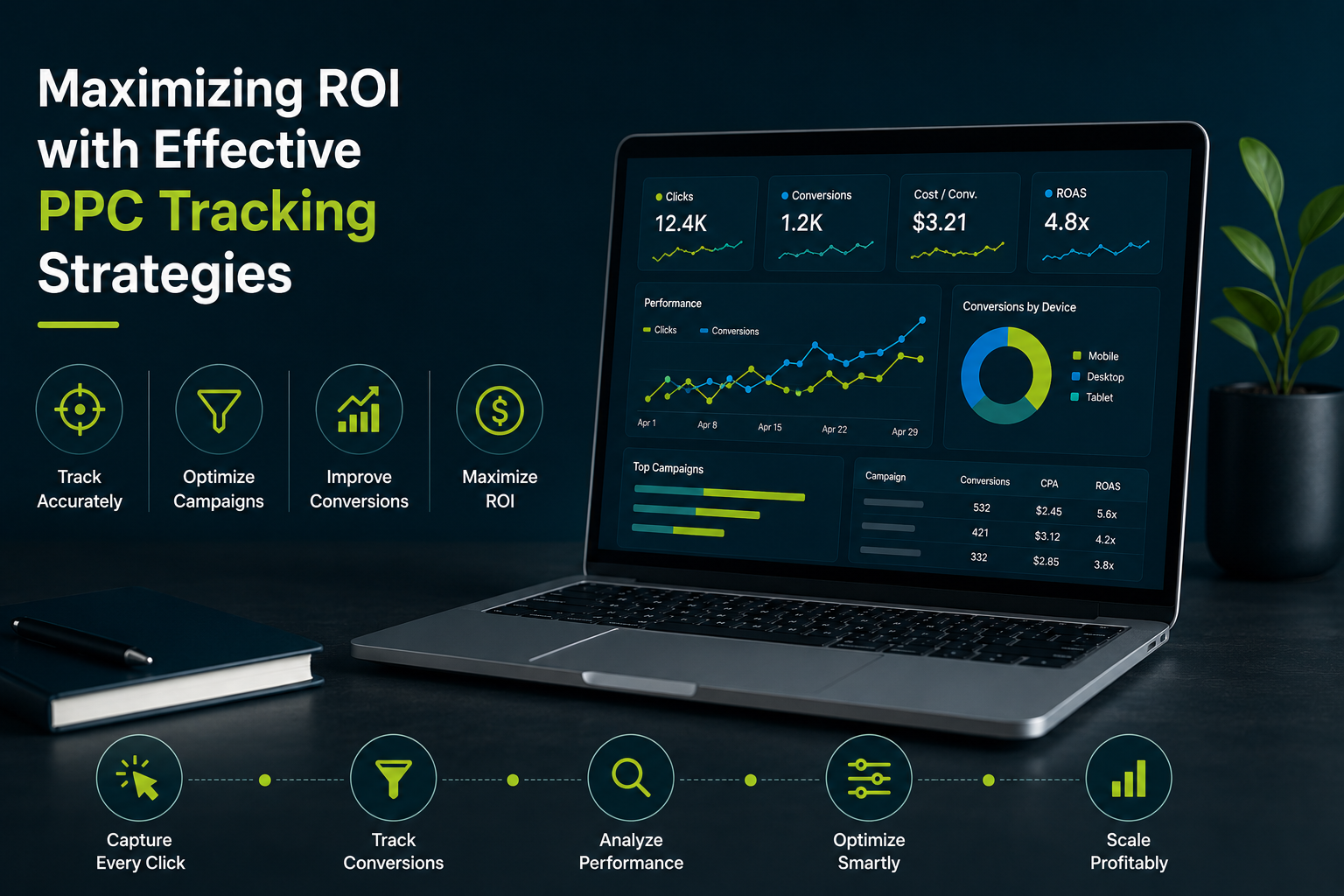
The value of pay-per-click (PPC) campaigns lies not in the initial investment but in the returns on investment (ROI) they generate. By tracking PPC campaigns effectively, businesses can refine their strategies, make data-driven decisions, and ultimately drive more conversions, leads, and sales. Understanding the metrics, tools, and strategies for proper PPC tracking is crucial for maximizing ROI and turning campaigns into efficient profit-generating machines.
PPC tracking is the process of collecting and analyzing data to evaluate campaign performance. It provides a clear picture of which ads, keywords, and placements drive results and which do not. By measuring every dollar spent and every result obtained from paid campaigns, businesses can identify areas where their ad spend creates value and where it is wasted. Continuous tracking allows businesses to adapt quickly to changes in the PPC landscape, stay ahead of the competition, and maintain campaign profitability.
Key Metrics for PPC Tracking
Tracking PPC campaigns means focusing on key metrics that show how well your ads are performing. This data helps refine strategies and make improvements that align with business goals. Here are the metrics to monitor for all campaigns:
Conversions
Conversions are the actions users take after clicking your ad. Tracking these actions provides essential insights into campaign effectiveness and helps refine your strategy. Each conversion type aligns with specific business goals, giving you actionable insights to optimize campaigns. Platforms like Google Ads make it easy to track these conversions across search, shopping, video, and display networks.
- Tracking conversions helps identify which ads drive the most conversions and which ones need improvement.
- Conversions provide insights into the effectiveness of ad targeting, ad copy, and landing page optimization.
- Conversion tracking helps businesses refine their bidding strategies and allocate budget more efficiently.
Cost-Per-Conversion (CPC)
The cost-per-conversion (CPC) metric measures the average cost of acquiring a conversion. This metric helps businesses evaluate the efficiency of their ad spend and identify areas for improvement. A lower CPC indicates that your ads are driving conversions at a lower cost, while a higher CPC suggests that your ads are not as effective.
- Tracking CPC helps businesses evaluate the ROI of their ad spend and make data-driven decisions.
- CPC tracking helps businesses refine their bidding strategies and optimize their ad spend for better ROI.
Conversion Rate
The conversion rate measures the percentage of users who complete a desired action after clicking your ad. This metric helps businesses evaluate the effectiveness of their ad targeting, ad copy, and landing page optimization. A higher conversion rate indicates that your ads are driving more conversions, while a lower conversion rate suggests that your ads need improvement.
- Tracking conversion rate helps businesses evaluate the effectiveness of their ad targeting and ad copy.
- Conversion rate tracking helps businesses refine their landing page optimization and improve user experience.
Tools for PPC Tracking
The right tools make PPC tracking easier and far more effective. With the right setup, you can turn data into actionable insights that improve campaign performance. Here are two tools to rely on for monitoring and optimizing PPC campaigns:
Google Analytics
Google Analytics is my go-to platform for tracking Google Ads campaigns. It provides everything you need to uncover what’s working and refine what’s not, while also enhancing your attribution insights. Here’s how to maximize its potential:
- Connect Google Analytics 4 with your Google Ads account to enhance attribution accuracy.
- Use data to create high-performing remarketing campaigns that target the right users at the right time.
Universal Event Tracking (UET) Tag
If you’re using Bing Ads (now Microsoft Advertising), the Universal Event Tracking (UET) tag is a must-have. It’s a powerful tool for gathering data and refining your campaigns. Here’s how to use it effectively:
- Always double-check your UET tag implementation to avoid losing valuable data.
- Incorporate A/B testing into your strategy to refine both messaging and user experience.
Setting Up PPC Tracking
Setting up PPC tracking might sound complicated, but it’s pretty straightforward if you break it into steps. Proper tracking ensures every campaign delivers actionable insights, so here’s how to do it right:
Conversion Tracking Setup
Start by identifying the actions that matter most for your business. These are the key indicators of success and will guide the rest of your tracking strategy. Here’s how to approach conversion tracking based on industry and goal type:
- For e-commerce businesses, track conversions like sales, purchases, and transactions.
- For lead generation businesses, track conversions like form submissions, downloads, and sign-ups.
Tracking Methods
Your tracking setup depends on the tools and flexibility you need. Here are the most common methods:
- Google Ads conversion tracking tags for Google Ads campaigns.
- Universal Event Tracking (UET) tags for Bing Ads campaigns.
Conclusion
Proper PPC tracking is essential for maximizing ROI and turning campaigns into efficient profit-generating machines. By understanding the key metrics, tools, and strategies for PPC tracking, businesses can refine their strategies, make data-driven decisions, and ultimately drive more conversions, leads, and sales.
Remember to track the right metrics, use the right tools, and set up your tracking correctly to ensure every campaign delivers actionable insights. With the right setup, you can turn data into actionable insights that improve campaign performance and drive more conversions, leads, and sales.
Key Takeaways
- PPC tracking is essential for maximizing ROI and turning campaigns into efficient profit-generating machines.
- Key metrics for PPC tracking include conversions, cost-per-conversion (CPC), and conversion rate.
- The right tools make PPC tracking easier and far more effective.
- Proper tracking ensures every campaign delivers actionable insights.
- Tracking setup depends on the tools and flexibility you need.
Frequently Asked Questions (FAQs)
What is PPC tracking?
PPC tracking is the process of collecting and analyzing data to evaluate campaign performance.
What are the key metrics for PPC tracking?
The key metrics for PPC tracking include conversions, cost-per-conversion (CPC), and conversion rate.
What are the most common methods of PPC tracking?
The most common methods of PPC tracking include Google Ads conversion tracking tags and Universal Event Tracking (UET) tags.
How do I set up PPC tracking?
To set up PPC tracking, start by identifying the actions that matter most for your business and then choose the right tracking method based on your tools and flexibility needs.
What are the benefits of PPC tracking?
The benefits of PPC tracking include maximizing ROI, turning campaigns into efficient profit-generating machines, and making data-driven decisions.