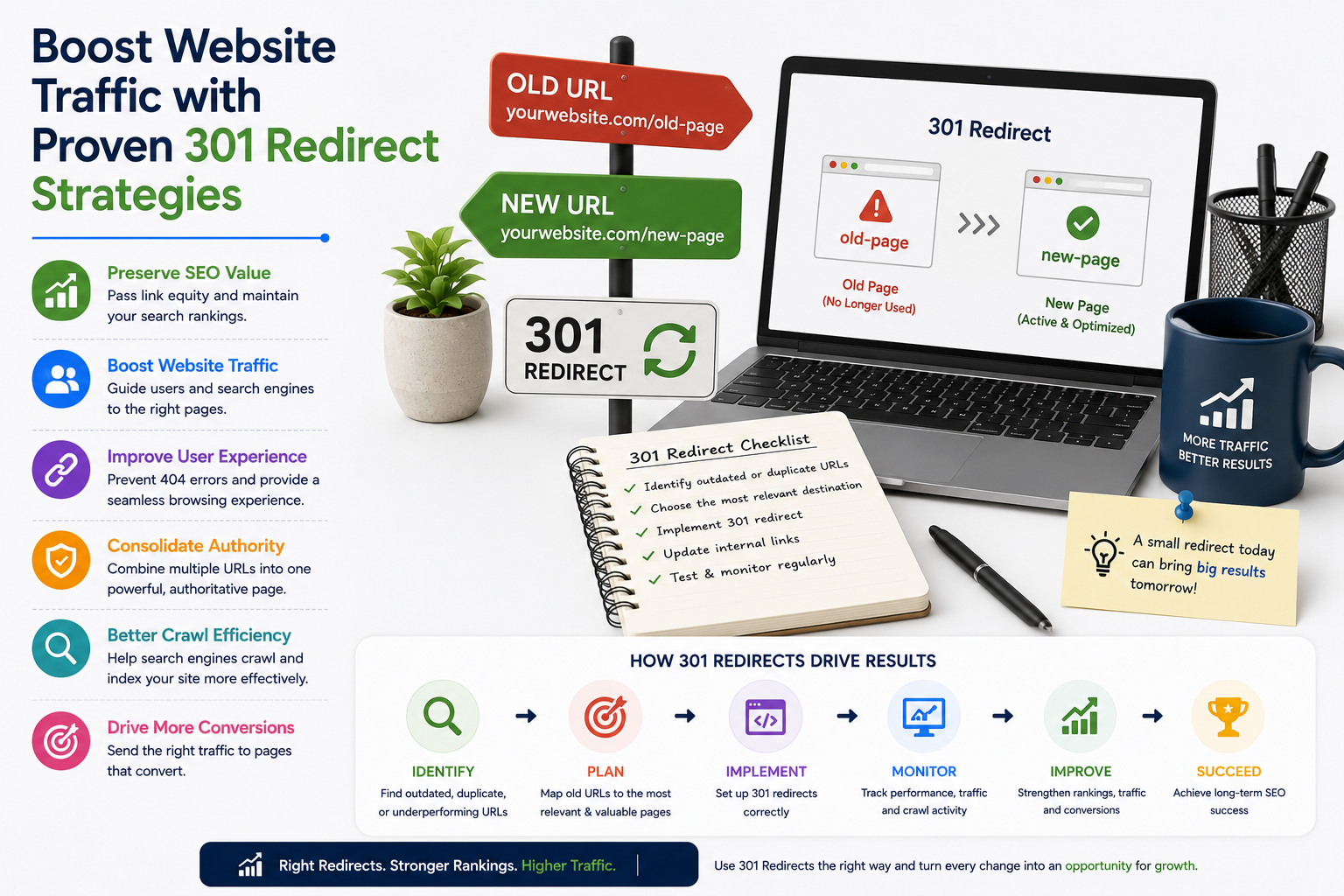
The 301 redirect – a crucial tool for every website owner and digital marketer. It’s a way to redirect traffic from a non-existent or outdated page to a new and improved one, ensuring that users don’t encounter a 404 error. In this article, we’ll delve into the world of 301 redirects, exploring their benefits, use cases, and best practices. Whether you’re a seasoned marketer or a website owner looking to improve your online presence, this guide will provide you with a comprehensive understanding of 301 redirects and how to implement them effectively.
When it comes to website maintenance, there are several reasons why you might need to migrate your website or change your overall domain. Perhaps you’ve rebranded, or you’re looking to improve your website’s architecture. Whatever the reason, a 301 redirect can help you achieve your goals without losing traffic or compromising user experience. In this section, we’ll explore some real-world examples of 301 redirects in action.
Example 1: Domain Migration
Let’s take ‘s website as an example. If you type www.neilpatel.com into your browser, you’ll be automatically redirected to neilpatel.com. This is a classic example of a 301 redirect in action. ‘s website uses a 301 redirect to redirect all traffic from the www subdomain to the root domain, ensuring that users don’t encounter any issues when accessing his website.
Another example of a 301 redirect can be seen in the instance where you need to redirect a single page, such as a blog post or landing page. Perhaps you’ve updated the content or changed the URL. In this case, a 301 redirect can help you transfer page authority to the new page, ensuring that users don’t encounter a dead page.
Example 2: Blog Post Redirect
For instance, let’s say you published a blog post years ago with a long and unoptimized URL. However, you’ve since updated the content and changed the URL to something more compelling for SEO. In this case, you can implement a 301 redirect to transfer page authority to the new page, ensuring that users don’t encounter a dead link.
Use Cases for 301 Redirects
So, when would you need to use a 301 redirect? Here are some common use cases:
- You’ve rebranded and need to migrate your website to a new domain.
- You’ve updated the content of a blog post or landing page and need to redirect traffic to the new page.
- You’ve changed the URL structure of your website and need to redirect old URLs to the new ones.
- You’ve merged two or more pages into one and need to redirect traffic from the old pages to the new one.
- You’ve changed the product category names on your e-commerce website and need to redirect old product category URLs to the new ones.
Now that we’ve covered the use cases for 301 redirects, let’s talk about how to implement them. The process depends on the website builder or CMS you’re using. Some website builders, like Shopify or Squarespace, have built-in settings that make it easy to set up a redirect. Others may require you to use a third-party plugin or tool.
Implementing 301 Redirects
Here are the general steps to implement a 301 redirect:
- Identify the old URL you want to redirect traffic from.
- Identify the new URL you want to redirect traffic to.
- Set up a 301 redirect using your website builder or CMS.
- Test the redirect to ensure it’s working correctly.
With these steps in mind, you can implement 301 redirects on your website to improve user experience and SEO. By redirecting traffic from non-existent or outdated pages to new and improved ones, you can ensure that your users don’t encounter a 404 error and that your website’s SEO remains intact.
The Benefits of 301 Redirects
So, what are the benefits of using 301 redirects? Here are some of the most significant advantages:
- Improves user experience by redirecting traffic to new and improved pages.
- Preserves SEO by transferring page authority to the new page.
- Reduces bounce rates by ensuring that users are directed to relevant content.
- Helps with website maintenance by allowing you to easily update your website’s architecture.
Conclusion
In conclusion, 301 redirects are a crucial tool for every website owner and digital marketer. By redirecting traffic from non-existent or outdated pages to new and improved ones, you can improve user experience, preserve SEO, and reduce bounce rates. Whether you’re rebranding, updating content, or changing the URL structure of your website, 301 redirects can help you achieve your goals without compromising user experience.
So, what are you waiting for? Implement 301 redirects on your website today and start improving user experience and SEO.
Key Takeaways
- 301 redirects are a crucial tool for improving user experience and SEO.
- Use 301 redirects when rebranding, updating content, or changing the URL structure of your website.
- Implement 301 redirects using your website builder or CMS.
- Test the redirect to ensure it’s working correctly.
- Preserve SEO by transferring page authority to the new page.
- Reduce bounce rates by ensuring that users are directed to relevant content.
Frequently Asked Questions (FAQs)
What is a 301 redirect?
A 301 redirect is a permanent redirect from one URL to another. It’s used to transfer traffic and page authority from an old page to a new one.
How do I implement a 301 redirect?
Implementing a 301 redirect depends on your website builder or CMS. Some website builders have built-in settings that make it easy to set up a redirect, while others may require you to use a third-party plugin or tool.
What are the benefits of 301 redirects?
The benefits of 301 redirects include improving user experience, preserving SEO, reducing bounce rates, and helping with website maintenance.
Can I use 301 redirects for non-permanent redirects?
No, 301 redirects are permanent redirects and should not be used for non-permanent redirects. For non-permanent redirects, you should use a 302 redirect or a meta refresh tag.