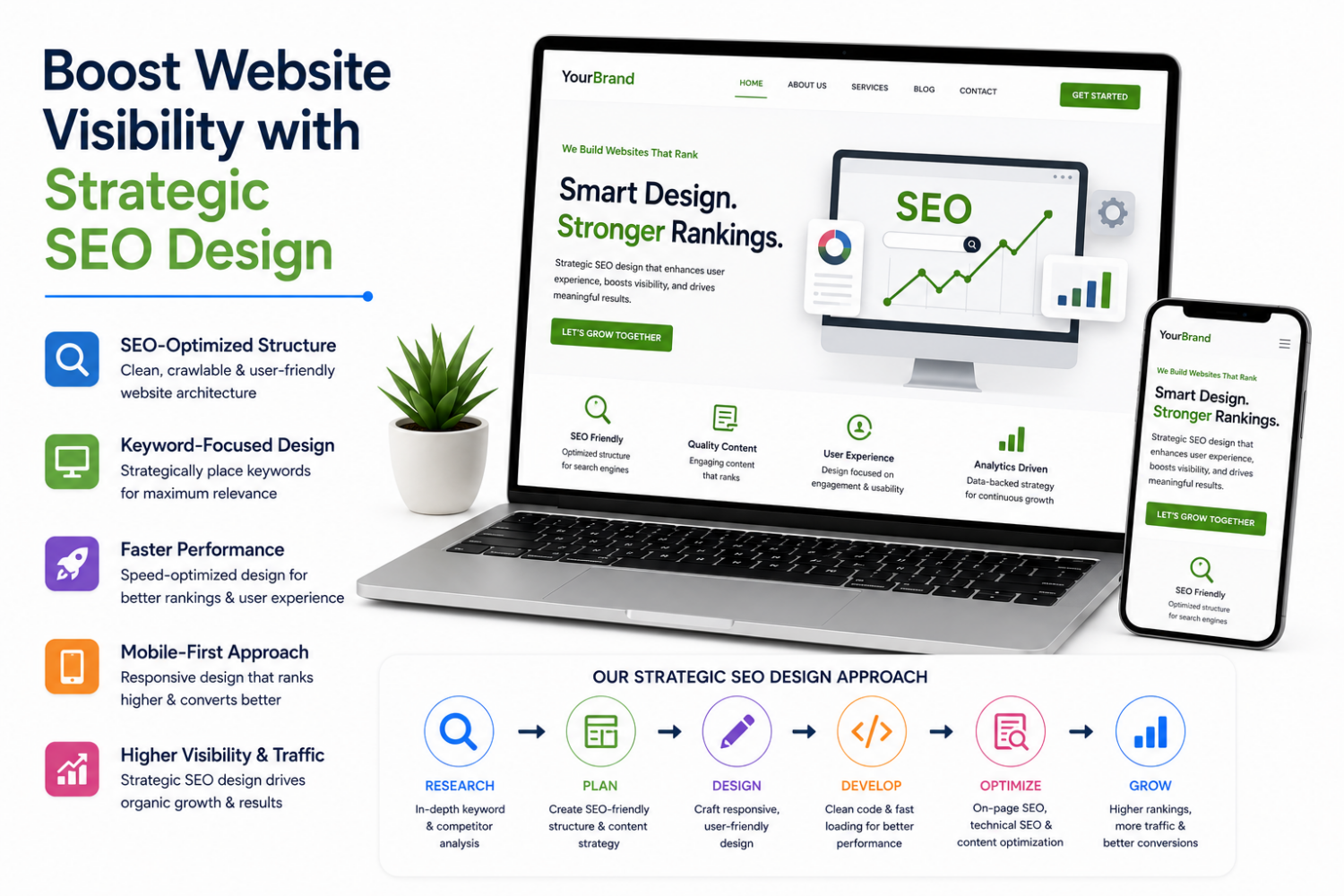
When it comes to building a website, many people focus on making it visually appealing and user-friendly. However, a website that doesn’t rank well on search engines is essentially invisible to potential customers. This is why website design for SEO is crucial for businesses looking to increase their online presence. By incorporating search engine optimization best practices into the website development process, businesses can create a website that not only looks great but also ranks well on search engines.
Why SEO-Friendly Website Design Matters
There are several benefits to building an SEO-friendly website. For one, it can help increase the website’s visibility on search engines, which can lead to more traffic and ultimately, more sales. Additionally, an SEO-friendly website is easier to maintain and update, as it is designed with search engine optimization in mind from the start. This can save businesses time and money in the long run.
The Four Types of Website Structures
There are four main types of website structures, which can be categorized into two groups: top-down and bottom-up. Top-down websites are designed with a clear hierarchy and structure, while bottom-up websites are more flexible and allow for changes over time.
- A top-down website is designed with a clear hierarchy, making it easier for users and search engines to navigate the pages. However, this approach can be limiting, as it requires careful planning and can be difficult to change once established.
- A bottom-up website, on the other hand, is more flexible and allows for changes over time. However, this approach can make it harder for search engines and users to navigate the website.
- The four main types of website structures are: hierarchical, sequential, database, and hybrid.
Hierarchical Website Structure
A hierarchical website structure is the most popular type of website structure. It involves dividing larger, more general category pages into smaller, individual pages. This approach is commonly used in e-commerce websites, where high-level product categories are broken down into smaller, more specific categories.
- Examples of hierarchical website structures include e-commerce websites, such as Amazon, where product categories are broken down into smaller, more specific categories.
- Hierarchical website structures are also commonly used in blogs and news websites, where articles are categorized by topic and further broken down into subtopics.
- This approach allows for easy navigation and categorization of content, making it easier for users and search engines to find what they’re looking for.
Sequential Website Structure
A sequential website structure follows a simple page-to-page path, making it easy for users to navigate and follow a specific flow. This approach is commonly used in simple websites or when creating a campaign with multiple landing pages.
- Examples of sequential website structures include checkouts and onboarding flows, where users are guided through a series of steps to complete a task or achieve a goal.
- Sequential website structures are also commonly used in landing pages, where users are directed to a specific page or action after clicking on a link or ad.
- This approach allows for a clear and straightforward user experience, making it easier for users to complete tasks and achieve goals.
Database Website Structure
A database website structure is a complex bottom-up structure that relies on search and internal linking for navigation. This approach is commonly used in websites with a vast amount of data, such as e-commerce stores, online forums, and social networks.
- Examples of database website structures include e-commerce stores, such as Amazon, where search and internal linking are used to navigate the vast amount of product categories and subcategories.
- Database website structures are also commonly used in online forums and social networks, where users can search and navigate through a vast amount of content and user-generated content.
- This approach allows for easy navigation and categorization of content, making it easier for users and search engines to find what they’re looking for.
Hybrid Website Structure
A hybrid website structure combines elements of hierarchical, sequential, and database website structures. This approach is commonly used in complex websites that require a combination of these structures.
- Examples of hybrid website structures include e-commerce stores with a large product catalog, where a hierarchical structure is used for product categories and a sequential structure is used for checkout and onboarding flows.
- Hybrid website structures are also commonly used in websites with a large amount of user-generated content, such as social networks and online forums, where a database structure is used for navigation and a hierarchical structure is used for categorization.
- This approach allows for a flexible and adaptable website structure that can accommodate a wide range of content and user needs.
Key Takeaways
- A website’s structure is crucial for search engine optimization and user experience.
- There are four main types of website structures: hierarchical, sequential, database, and hybrid.
- A hierarchical website structure is the most popular type of website structure, commonly used in e-commerce websites and blogs.
- A sequential website structure follows a simple page-to-page path, commonly used in simple websites and landing pages.
- A database website structure relies on search and internal linking for navigation, commonly used in websites with a vast amount of data.
- A hybrid website structure combines elements of hierarchical, sequential, and database website structures, commonly used in complex websites.
Frequently Asked Questions (FAQs)
What is website structure?
Website structure refers to the organization and arrangement of content on a website, including the hierarchy and relationships between pages and categories.
What are the benefits of an SEO-friendly website structure?
An SEO-friendly website structure can improve search engine rankings, increase website visibility, and enhance user experience.
What are the different types of website structures?
The four main types of website structures are: hierarchical, sequential, database, and hybrid.
How do I choose the right website structure for my business?
The right website structure for your business will depend on your specific needs and goals. Consider factors such as content type, user needs, and search engine optimization requirements when choosing a website structure.
Conclusion
In conclusion, website structure is a crucial aspect of search engine optimization and user experience. By choosing the right website structure for your business, you can improve search engine rankings, increase website visibility, and enhance user experience. Remember to consider factors such as content type, user needs, and search engine optimization requirements when choosing a website structure.
By following the tips and best practices outlined in this article, you can create a website structure that meets your business needs and goals, and helps you achieve success in the online world.
Don’t forget to keep your website structure up-to-date and flexible, as the online landscape is constantly evolving. With the right website structure, you can stay ahead of the competition and achieve long-term success in the online world.