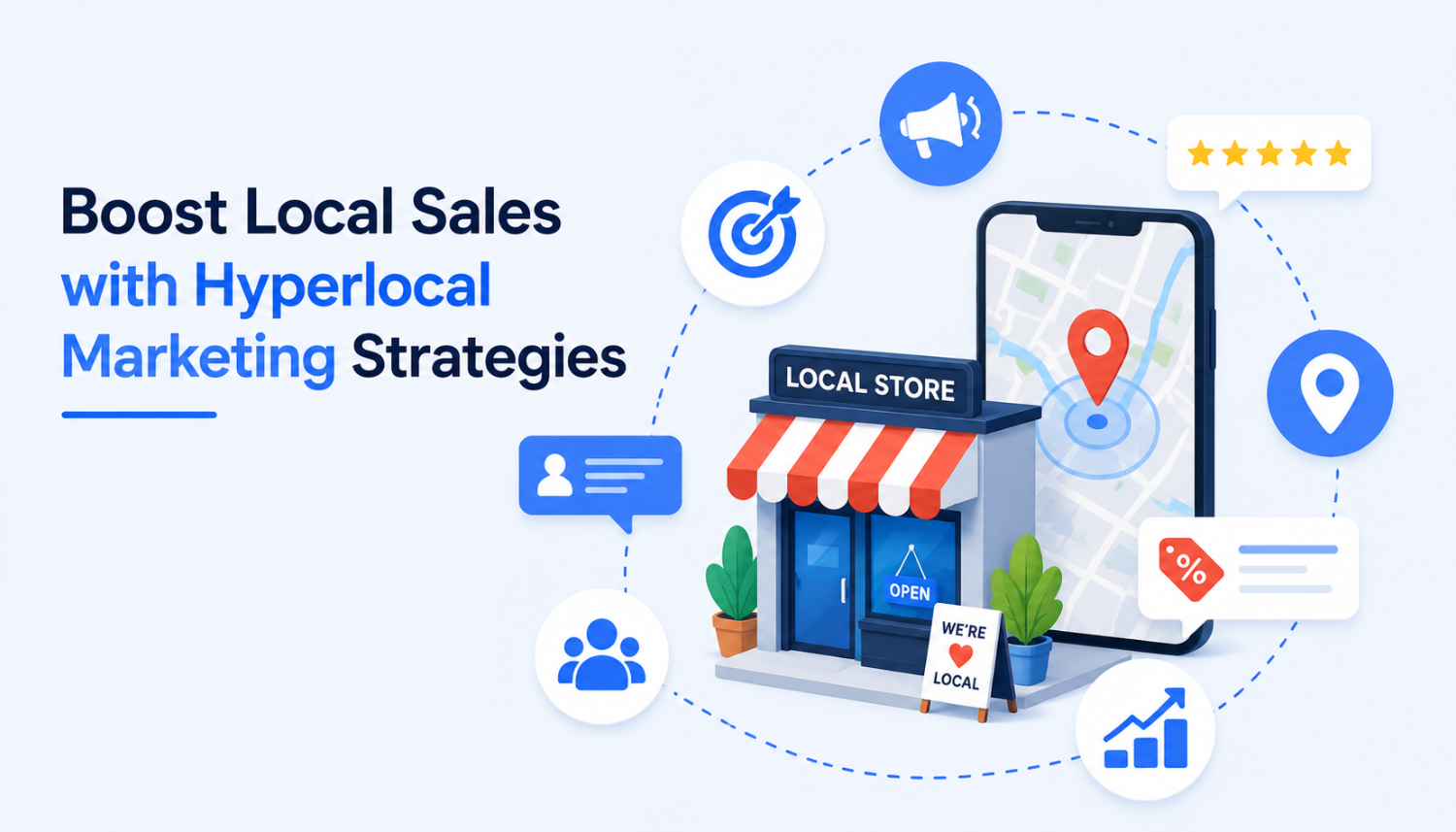
As the world becomes increasingly digital, it’s easy to assume that digital marketing strategies are only suitable for online businesses. However, this is not the case. Many brick-and-mortar businesses are leveraging digital marketing techniques to drive foot traffic and increase sales, and one of the most effective strategies is hyperlocal marketing.
Hyperlocal marketing is a marketing strategy that focuses on reaching customers in a specific geographic area. By targeting customers who are likely to be interested in your products or services, you can increase brand awareness, drive foot traffic, and ultimately boost sales. This strategy is particularly effective for brick-and-mortar businesses, as it allows them to reach customers who are already in their vicinity.
The Benefits of Hyperlocal Marketing
So, why is hyperlocal marketing so effective? Here are some of the key benefits:
- By targeting customers in a specific geographic area, you can increase the likelihood of conversion. This is because customers who are already in your vicinity are more likely to be interested in your products or services.
- Hyperlocal marketing allows you to reach customers who are actively searching for products or services like yours. This means that you can target customers who are already motivated to make a purchase.
- By focusing on a specific geographic area, you can reduce your advertising costs. This is because you’re targeting a smaller audience, which means that your ads are more likely to be seen by people who are interested in your products or services.
- Hyperlocal marketing allows you to create personalized ads that are tailored to the needs and interests of your target audience. This means that you can increase the likelihood of conversion by creating ads that resonate with your customers.
- By tracking the performance of your ads, you can see which geographic areas are driving the most conversions. This means that you can refine your targeting and focus on areas that are most likely to drive sales.
How to Implement Hyperlocal Marketing
So, how do you implement hyperlocal marketing? Here are some steps to follow:
- Determine your target geographic area. This could be a specific neighborhood, city, or region.
- Identify your target audience. This could be based on demographics, interests, or behaviors.
- Create targeted ads that are tailored to the needs and interests of your target audience.
- Use location-based targeting to reach customers who are in your target geographic area.
- Track the performance of your ads and refine your targeting based on the data.
Types of Hyperlocal Marketing
There are several types of hyperlocal marketing, including:
- Location-based targeting: This involves targeting customers who are in a specific geographic area based on their location.
- Proximity marketing: This involves targeting customers who are in close proximity to your business.
- Geofencing: This involves creating a virtual boundary around your business and targeting customers who enter that boundary.
- Beacon marketing: This involves using Bluetooth beacons to target customers who are in close proximity to your business.
Measuring the Success of Hyperlocal Marketing
Measuring the success of hyperlocal marketing involves tracking the performance of your ads and refining your targeting based on the data. Here are some key metrics to track:
- Conversion rate: This is the percentage of customers who make a purchase after seeing your ad.
- Return on ad spend (ROAS): This is the revenue generated by your ads divided by the cost of those ads.
- Cost per acquisition (CPA): This is the cost of acquiring a new customer divided by the number of customers acquired.
- Customer lifetime value (CLV): This is the total value of a customer over their lifetime divided by the number of customers.
Challenges of Hyperlocal Marketing
While hyperlocal marketing can be an effective way to drive foot traffic and increase sales, it also presents several challenges. Here are some of the key challenges:
- Geographic targeting: This can be challenging, especially if you’re targeting a specific geographic area with a small population.
- Ad creative: This can be challenging, especially if you’re creating ads that are tailored to the needs and interests of a specific geographic area.
- Ad budget: This can be challenging, especially if you’re allocating a small budget to a specific geographic area.
- Measuring success: This can be challenging, especially if you’re tracking the performance of your ads across multiple geographic areas.
- Competition: This can be challenging, especially if you’re competing with other businesses in the same geographic area.
Conclusion
Hyperlocal marketing is a powerful way to drive foot traffic and increase sales for brick-and-mortar businesses. By targeting customers in a specific geographic area, you can increase the likelihood of conversion, reduce your advertising costs, and create personalized ads that resonate with your customers.
While hyperlocal marketing presents several challenges, it can also provide several benefits. By tracking the performance of your ads and refining your targeting based on the data, you can maximize the effectiveness of your hyperlocal marketing campaigns and drive more sales for your business.
Key Takeaways
- Hyperlocal marketing is a powerful way to drive foot traffic and increase sales for brick-and-mortar businesses.
- By targeting customers in a specific geographic area, you can increase the likelihood of conversion and reduce your advertising costs.
- Hyperlocal marketing allows you to create personalized ads that are tailored to the needs and interests of your target audience.
- Measuring the success of hyperlocal marketing involves tracking the performance of your ads and refining your targeting based on the data.
- Challenges of hyperlocal marketing include geographic targeting, ad creative, ad budget, measuring success, and competition.
Frequently Asked Questions (FAQs)
What is hyperlocal marketing?
Hyperlocal marketing is a marketing strategy that focuses on reaching customers in a specific geographic area.
How does hyperlocal marketing work?
Hyperlocal marketing involves targeting customers in a specific geographic area using location-based targeting, proximity marketing, geofencing, and beacon marketing.
What are the benefits of hyperlocal marketing?
The benefits of hyperlocal marketing include increased foot traffic, increased sales, reduced advertising costs, and increased conversion rates.
What are the challenges of hyperlocal marketing?
The challenges of hyperlocal marketing include geographic targeting, ad creative, ad budget, measuring success, and competition.