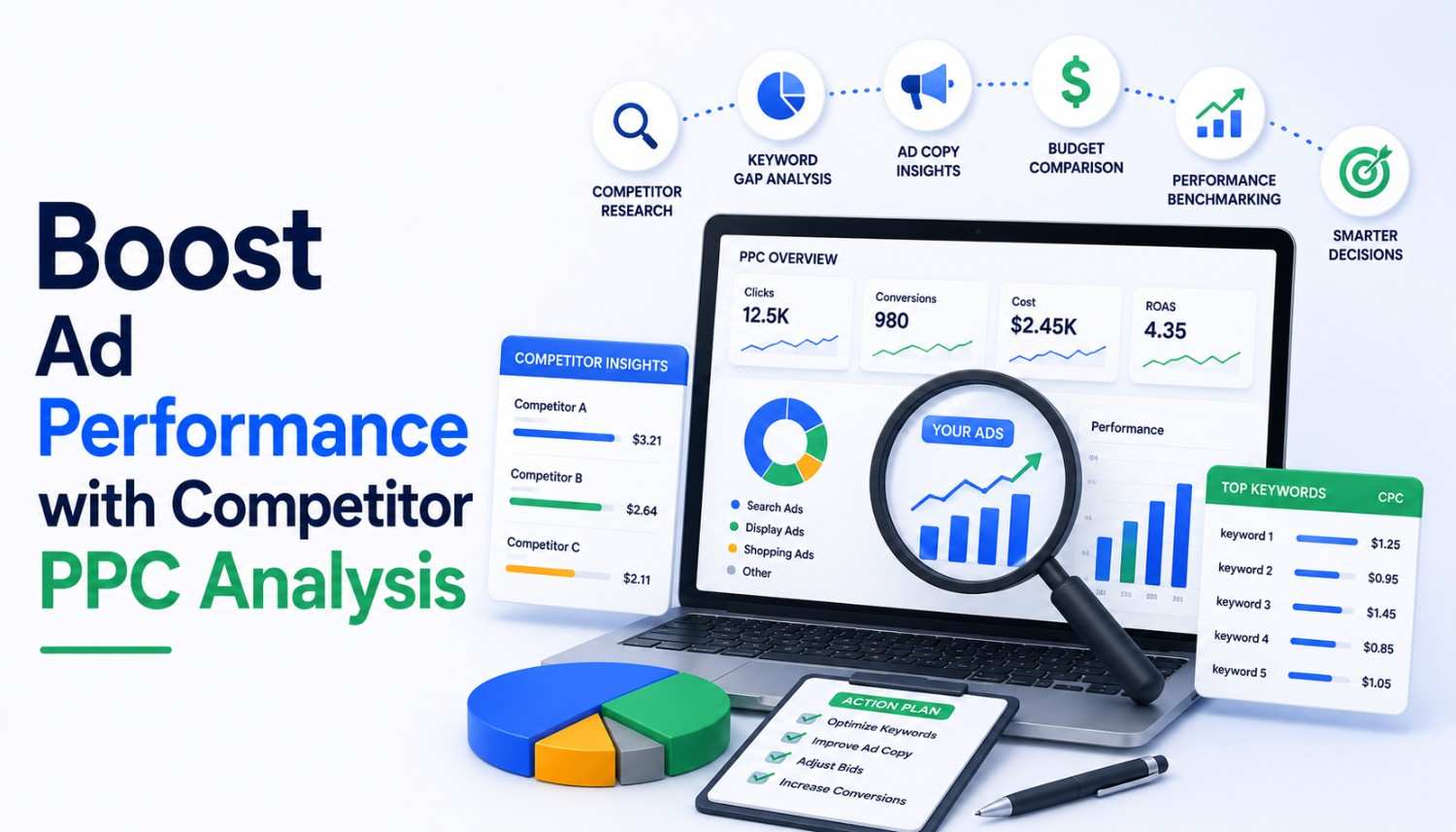
Understanding the intricacies of your competitors’ pay-per-click (PPC) strategies is crucial for gaining a competitive edge in the digital marketing landscape. A PPC competitor analysis is a comprehensive process that involves researching and evaluating your competitors’ PPC tactics to uncover actionable insights that can supercharge your ad performance and ROI. By analyzing the keywords they target, their bidding strategies, ad copy, and landing pages, you can identify opportunities to refine your campaigns and stay ahead of the competition.
One of the biggest challenges many businesses face when running PPC campaigns is finding the right balance between spending enough to drive results and overspending on underperforming keywords. This is where a competitor PPC analysis comes in – it helps you understand how your competitors allocate their budget and identify areas where you can optimize your own ad spend. By analyzing their bidding strategies, you can get a sense of which keywords are worth the investment and which might be overpriced.
Benefits of a PPC Competitor Analysis
A PPC competitor analysis offers numerous benefits, including identifying opportunities your rivals have overlooked, optimizing your ad spend, and crafting more compelling ads. By studying your competitors’ strategies, you can uncover untapped audiences and drive more conversions. For instance, you might discover a long-tail keyword with high intent that your competitors have missed or find a demographic they’re not addressing in their ad copy.
Identifying Opportunities Your Rivals Have Overlooked
- By analyzing your competitors’ strategies, you can identify long-tail keywords with high intent that they may have missed.
- You can also find demographics that your competitors are not addressing in their ad copy, allowing you to target a wider audience.
- A competitor PPC analysis can help you uncover new opportunities for your business, such as targeting niche audiences or using specific keywords that are driving results for your competitors.
Optimizing Your Ad Spend
- By analyzing your competitors’ bidding strategies, you can get a sense of which keywords are worth the investment and which might be overpriced.
- You can also identify areas where you can optimize your ad spend by analyzing your competitors’ budget allocation and bidding strategies.
- A competitor PPC analysis can help you allocate your budget more strategically, improving your return on ad spend (ROAS) and driving more conversions.
Crafting More Compelling Ads
A competitor PPC analysis can also provide valuable insights into the ad copy that is driving results for your competitors. By analyzing their ad copy, you can identify key elements that are resonating with their target audience and use that information to craft more compelling ads for your own business.
Key Elements to Analyze in Your Competitors’ Ad Copy
- Headlines: Analyze the headlines your competitors are using to see what’s working for them and how you can use similar language and structure in your own ads.
- Benefits: Identify the benefits your competitors are highlighting in their ad copy and use that information to create more compelling ads for your own business.
- CTAs: Analyze the calls-to-action (CTAs) your competitors are using to see what’s driving results and how you can use similar language and structure in your own ads.
Common Mistakes to Avoid in Your Competitor PPC Analysis
While a competitor PPC analysis can be a valuable tool for improving your ad performance and ROI, there are some common mistakes to avoid. One of the most significant mistakes is copying your competitors’ strategies without understanding the context and nuances of their campaigns.
Why You Shouldn’t Copy Your Competitors’ Strategies
- Copies fail to understand the context and nuances of their competitors’ campaigns, which can lead to ineffective ad copy and poor ROI.
- Copies risk overspending on underperforming keywords and channels, which can lead to a significant decrease in ROI.
- Copies fail to account for differences in target audience and market conditions, which can lead to ineffective ad copy and poor ROI.
Tools to Use for a Competitor PPC Analysis
There are several tools available to help you conduct a competitor PPC analysis, including Google Ads, SEMrush, , and . These tools can provide valuable insights into your competitors’ PPC strategies, including their ad copy, bidding strategies, and budget allocation.
Google Ads
- Use Google Ads to analyze your competitors’ ad copy, including headlines, benefits, and CTAs.
- Analyze your competitors’ bidding strategies, including their keyword bids and ad position.
- Use Google Ads to identify areas where you can optimize your ad spend and improve your ROI.
SEMrush
- Use SEMrush to analyze your competitors’ ad copy, including headlines, benefits, and CTAs.
- Analyze your competitors’ bidding strategies, including their keyword bids and ad position.
- Use SEMrush to identify areas where you can optimize your ad spend and improve your ROI.
- Use to analyze your competitors’ ad copy, including headlines, benefits, and CTAs.
- Analyze your competitors’ bidding strategies, including their keyword bids and ad position.
- Use to identify areas where you can optimize your ad spend and improve your ROI.
Conclusion
Conducting a competitor PPC analysis can be a valuable tool for improving your ad performance and ROI. By analyzing your competitors’ strategies, you can identify opportunities to optimize your ad spend and craft more compelling ads. However, it’s essential to avoid common mistakes such as copying your competitors’ strategies without understanding the context and nuances of their campaigns.
By using the right tools and avoiding common mistakes, you can conduct a competitor PPC analysis that provides valuable insights into your competitors’ strategies and helps you stay ahead of the competition.
Key Takeaways
- A competitor PPC analysis can provide valuable insights into your competitors’ strategies and help you stay ahead of the competition.
- It’s essential to avoid common mistakes such as copying your competitors’ strategies without understanding the context and nuances of their campaigns.
- Using the right tools can help you conduct a competitor PPC analysis that provides valuable insights into your competitors’ strategies.
- A competitor PPC analysis can help you optimize your ad spend and craft more compelling ads.
- It’s essential to analyze your competitors’ ad copy, including headlines, benefits, and CTAs, to identify areas where you can improve your ad performance and ROI.
- A competitor PPC analysis can help you stay ahead of the competition and drive more conversions.
Frequently Asked Questions (FAQs)
What is a competitor PPC analysis?
A competitor PPC analysis is a comprehensive process that involves researching and evaluating your competitors’ PPC tactics to uncover actionable insights that can supercharge your ad performance and ROI.
What are the benefits of a competitor PPC analysis?
The benefits of a competitor PPC analysis include identifying opportunities your rivals have overlooked, optimizing your ad spend, and crafting more compelling ads.
What are the common mistakes to avoid in a competitor PPC analysis?
Common mistakes to avoid in a competitor PPC analysis include copying your competitors’ strategies without understanding the context and nuances of their campaigns.
What tools can I use for a competitor PPC analysis?
Tools to use for a competitor PPC analysis include Google Ads, SEMrush, , and .