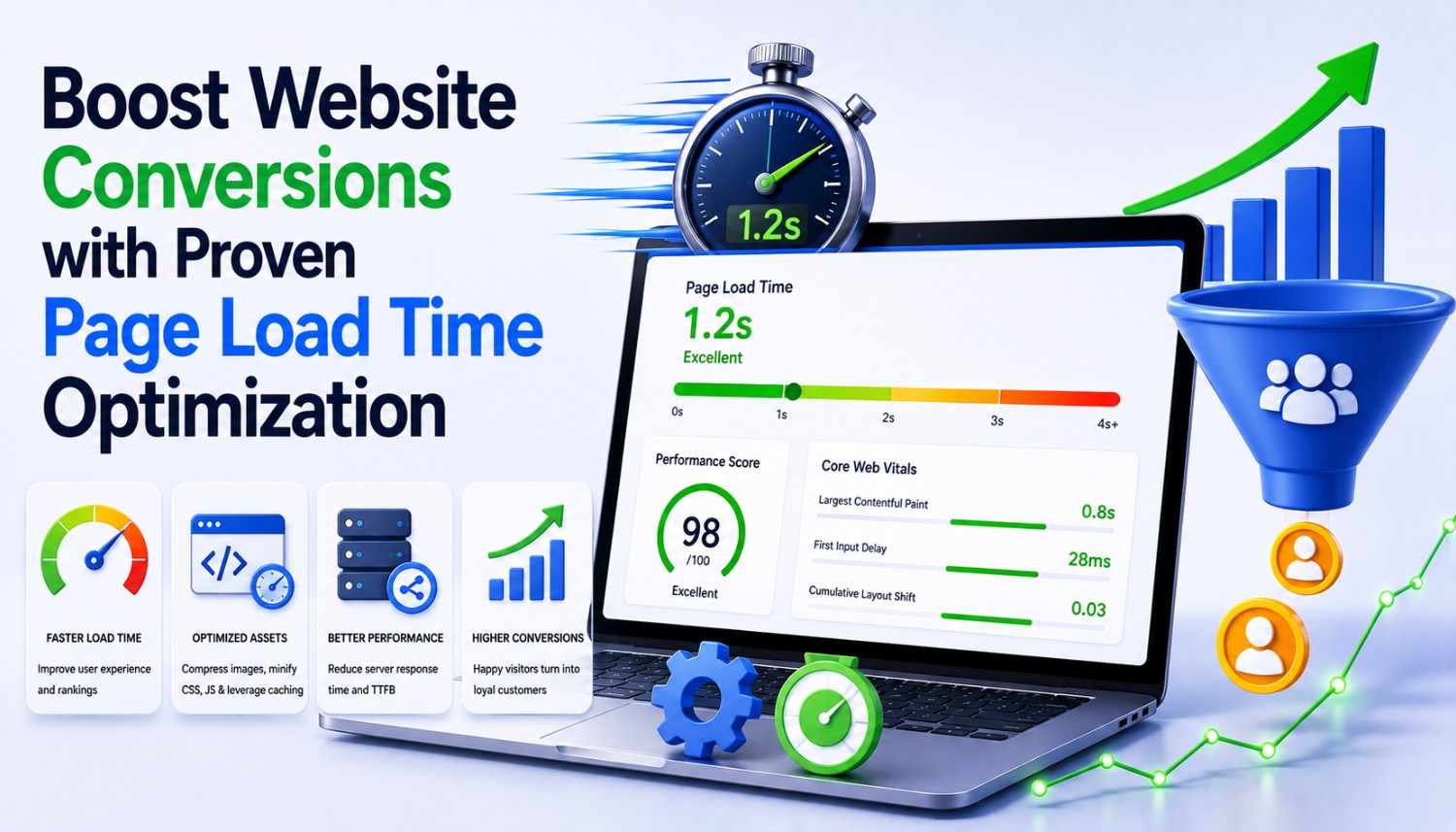
Imagine you’re clicking on a website link to learn more about a product, service, or piece of information. You click the link and wait for the website to load. And wait. And wait some more. Eventually, you’re sure the page is never going to load, and you decide that you simply don’t care to learn about that product, service, or piece of information anymore. You abandon the website and move on. This is due to a slow page load time, a factor that can leave hundreds or even thousands of website visitors on the table, rather than pulling them into your website and converting them into a customer.
The Importance of Page Load Time
Your page load time is a measurement of how long it takes for a page on your website to load, typically measured in seconds, from the initial load request to the final rendering of all page content. It’s based on a number of factors, like your website server, page design, file sizes, image compression, and more. In addition, different pages on your website can have different loading times based on each individual design.
Factors Affecting Page Load Time
- Website server: A slow server can significantly impact page load time, while a high-performance server can help speed up loading times.
- Page design: A cluttered or complex design can slow down page loading, while a simple and streamlined design can improve loading times.
- File sizes: Large files can take longer to load, while smaller files can load faster.
- Image compression: Compressing images can help reduce file sizes and improve loading times.
- Browser and device: Different browsers, devices, and locations can experience different loading times.
- Content and plugins: Too much content or plugins can slow down page loading.
- Caching: Implementing caching can help speed up page loading times by storing frequently accessed data in a faster location.
- Database queries: Complex database queries can slow down page loading.
- CDN: Using a Content Delivery Network (CDN) can help reduce loading times by serving content from a location closer to the user.
The Impact of Page Load Time on SEO
Page load time is a ranking factor in SEO. Google announced in 2010 that it was going to start using site speed as a factor in search engine ranking, and in 2018, it shared that page speed was also now a factor for mobile search results. A slow website can lead to a poor user experience, a higher bounce rate, and a lower conversion rate.
Measuring Page Load Time with PageSpeed Insights
Google makes it easy for you to find your page load time with its PageSpeed Insights tool. You can insert your home page or a specific landing page or blog post on your website, and then click “Analyze” to get your page load time results. You can also toggle between Mobile and Desktop to see the difference in how your page loads on different devices.
Interpreting PageSpeed Insights Results
PageSpeed Insights scores your page load time based on a scale of 0-100. A score above 90 is considered good, and you don’t need to make any changes. A score between 50-89 needs improvement, and a score below 50 is considered poor. You can also use the diagnostics section to identify areas for improvement.
Improving Page Load Time
- Optimize images: Compressing images can help reduce file sizes and improve loading times.
- Minify code: Minifying code can help reduce file sizes and improve loading times.
- Remove unnecessary plugins: Too many plugins can slow down page loading.
- Use a caching plugin: Implementing caching can help speed up page loading times by storing frequently accessed data in a faster location.
- Use a CDN: Using a Content Delivery Network (CDN) can help reduce loading times by serving content from a location closer to the user.
- Optimize database queries: Complex database queries can slow down page loading.
- Use a lightweight theme: A lightweight theme can help improve page loading times by reducing the amount of code and files required to load the page.
Conclusion
Page load time is a critical factor in SEO and user experience. By understanding the factors that affect page load time and using tools like PageSpeed Insights to measure and improve your page load time, you can improve your website’s performance and increase conversions. Remember to always prioritize user experience and optimize your website for speed and performance.
By following the strategies outlined in this article, you can improve your page load time and provide a better user experience for your visitors. Remember to always test and iterate on your improvements to ensure the best possible results.
Key Takeaways
- Page load time is a ranking factor in SEO.
- Google’s PageSpeed Insights tool can help you measure and improve your page load time.
- Optimizing images, minifying code, removing unnecessary plugins, and using a caching plugin can help improve page load time.
- Using a CDN and optimizing database queries can also help improve page load time.
- A lightweight theme can help improve page load times by reducing the amount of code and files required to load the page.
Frequently Asked Questions (FAQs)
What is page load time, and why is it important?
Page load time is the time it takes for a page on your website to load. It’s an important factor in SEO and user experience because a slow website can lead to a poor user experience, a higher bounce rate, and a lower conversion rate.
How do I measure page load time?
You can use Google’s PageSpeed Insights tool to measure your page load time. Simply enter your website’s URL, and the tool will provide you with a score and recommendations for improvement.
What are some ways to improve page load time?
Some ways to improve page load time include optimizing images, minifying code, removing unnecessary plugins, and using a caching plugin. You can also use a CDN and optimize database queries to improve page load time.
What is a lightweight theme, and how can it help improve page load time?
A lightweight theme is a theme that is designed to be fast and efficient. It can help improve page load time by reducing the amount of code and files required to load the page.