Pay-per-click (PPC) marketing can be a game-changer for businesses, driving customers to their website and increasing conversions. However, it can be challenging to make money through PPC ads, and it’s all too easy to make common mistakes that can wreck your campaign. At Marastu, a digital marketing agency, we’ve helped numerous businesses optimize their PPC campaigns, and we’re excited to share our expertise with you in this article.
In this article, we’ll explore how to use a SWOT analysis to improve your PPC campaigns. A SWOT analysis is a corporate evaluation technique that can be used to assess anything from an entire company to a single PPC campaign. It stands for Strengths, Weaknesses, Opportunities, and Threats, and it’s an essential tool for businesses looking to stay ahead of the competition.
What is a SWOT Analysis?
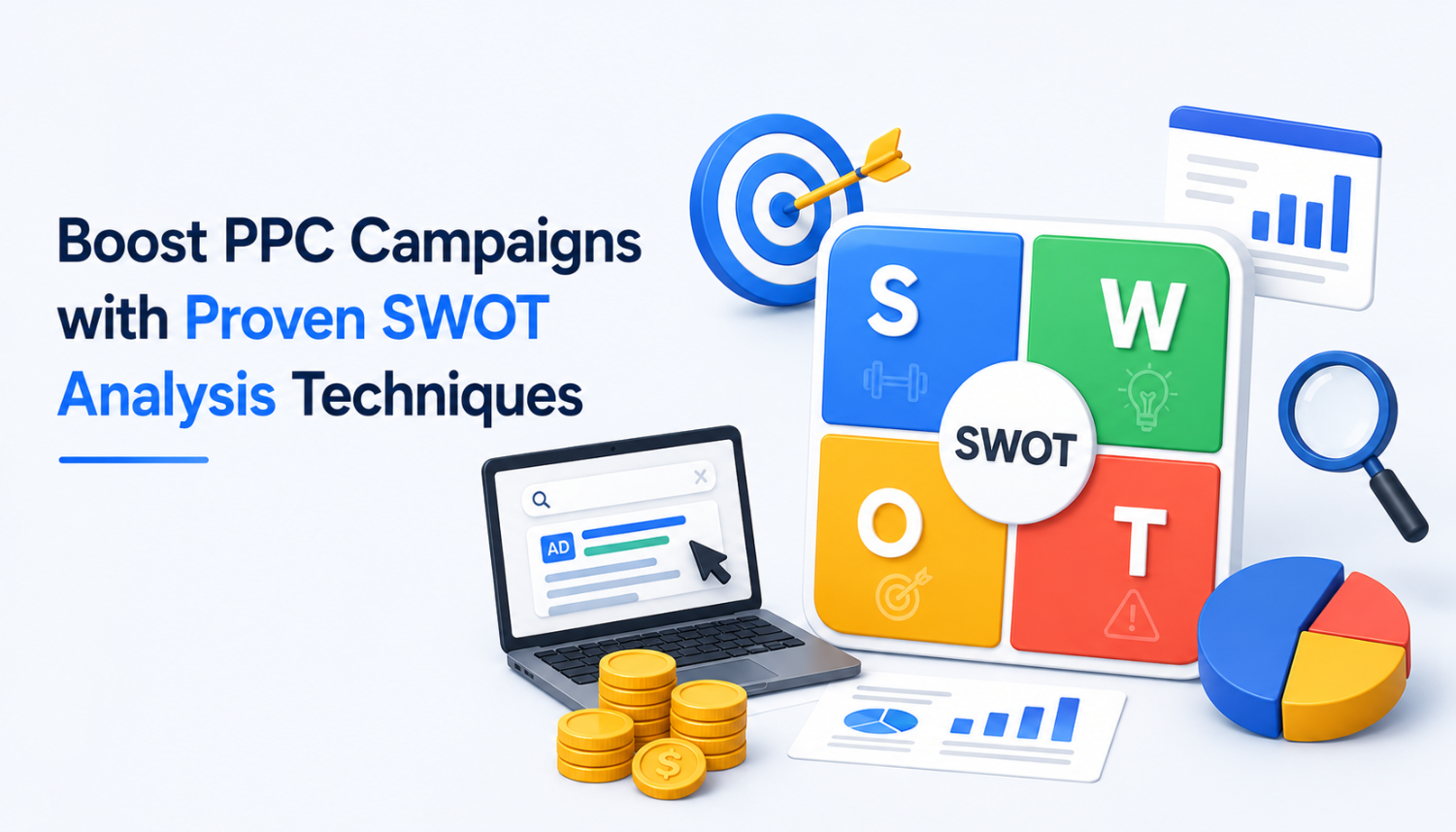
A SWOT analysis is a simple yet powerful tool that helps businesses identify their internal and external factors that can impact their performance. It’s a 2×2 grid that consists of four quadrants: Strengths, Weaknesses, Opportunities, and Threats. By analyzing these factors, businesses can develop strategies to leverage their strengths, address their weaknesses, capitalize on opportunities, and mitigate threats.
Internal Factors: Strengths and Weaknesses
Internal factors are those that are within your control, such as your team, processes, and resources. Strengths are the positive factors that give you an edge over your competitors, while weaknesses are the areas that need improvement. For example, a business may have a strong sales team, but struggle with customer service.
- Examples of internal strengths include a strong brand reputation, a talented team, and a well-established process.
- Examples of internal weaknesses include a lack of resources, inadequate training, and inefficient processes.
External Factors: Opportunities and Threats
External factors are those that are outside of your control, such as the economy, industry trends, and competitor activity. Opportunities are the positive factors that can help your business grow, while threats are the negative factors that can harm your business. For example, a business may see an opportunity to expand into a new market, but face a threat from a competitor’s new product launch.
- Examples of external opportunities include a growing market, new technology, and changing consumer behavior.
- Examples of external threats include economic downturn, increased competition, and regulatory changes.
How to Conduct a SWOT Analysis for Your PPC Campaign
Conducting a SWOT analysis for your PPC campaign involves brainstorming and identifying your internal and external factors. Here’s a step-by-step guide to help you get started:
Step 1: Identify Your Strengths
Start by identifying your strengths, such as a strong brand reputation, a talented team, or a well-established process. Consider your PPC campaign’s performance, including your keyword selection, ad copy, and landing pages.
- Examples of strengths include a high conversion rate, a strong click-through rate, and a well-optimized landing page.
- Examples of strengths include a strong brand reputation, a talented team, and a well-established process.
Step 2: Identify Your Weaknesses
Next, identify your weaknesses, such as a lack of resources, inadequate training, or inefficient processes. Consider your PPC campaign’s performance, including your keyword selection, ad copy, and landing pages.
- Examples of weaknesses include a low conversion rate, a poor click-through rate, and a poorly optimized landing page.
- Examples of weaknesses include a lack of resources, inadequate training, and inefficient processes.
Step 3: Identify Your Opportunities
Now, identify your opportunities, such as a growing market, new technology, or changing consumer behavior. Consider your PPC campaign’s performance, including your keyword selection, ad copy, and landing pages.
- Examples of opportunities include a growing market, new technology, and changing consumer behavior.
- Examples of opportunities include a new product launch, a change in consumer preferences, and an increase in demand for your product or service.
Step 4: Identify Your Threats
Finally, identify your threats, such as economic downturn, increased competition, or regulatory changes. Consider your PPC campaign’s performance, including your keyword selection, ad copy, and landing pages.
- Examples of threats include economic downturn, increased competition, and regulatory changes.
- Examples of threats include a competitor’s new product launch, a change in consumer preferences, and a decrease in demand for your product or service.
Conclusion
Conducting a SWOT analysis for your PPC campaign is a powerful tool to help you identify your internal and external factors that can impact your performance. By following the steps outlined in this article, you can develop strategies to leverage your strengths, address your weaknesses, capitalize on opportunities, and mitigate threats. Remember to regularly review and update your SWOT analysis to ensure your PPC campaign remains competitive and effective.
At Marastu, we’re committed to helping businesses optimize their PPC campaigns and achieve their goals. Contact us today to learn more about our PPC services and how we can help you take your business to the next level.
Key Takeaways
- Conducting a SWOT analysis is a powerful tool to help you identify your internal and external factors that can impact your PPC campaign’s performance.
- Identifying your strengths, weaknesses, opportunities, and threats can help you develop strategies to improve your PPC campaign’s performance.
- Regularly reviewing and updating your SWOT analysis is essential to ensure your PPC campaign remains competitive and effective.
- At Marastu, we’re committed to helping businesses optimize their PPC campaigns and achieve their goals.
- Contact us today to learn more about our PPC services and how we can help you take your business to the next level.
Frequently Asked Questions (FAQs)
What is a SWOT analysis?
A SWOT analysis is a corporate evaluation technique that helps businesses identify their internal and external factors that can impact their performance.
How do I conduct a SWOT analysis for my PPC campaign?
Conducting a SWOT analysis for your PPC campaign involves brainstorming and identifying your internal and external factors that can impact your performance. Start by identifying your strengths, weaknesses, opportunities, and threats, and then develop strategies to leverage your strengths, address your weaknesses, capitalize on opportunities, and mitigate threats.
What are the benefits of conducting a SWOT analysis for my PPC campaign?
The benefits of conducting a SWOT analysis for your PPC campaign include identifying areas for improvement, developing strategies to improve your campaign’s performance, and staying ahead of the competition.
How often should I conduct a SWOT analysis for my PPC campaign?
You should conduct a SWOT analysis for your PPC campaign regularly, ideally every quarter or every six months, to ensure your campaign remains competitive and effective.