When it comes to creating a successful e-commerce website, there are several crucial elements that need to be taken into consideration, including design, functionality, and copy. While design and functionality are certainly important, copy is often overlooked, but it is actually one of the most critical components of a website. Your website’s copy is the first thing that customers will see and read, and it will greatly impact their perception of your brand and products. In fact, a well-crafted copy can make all the difference between a sale and a missed opportunity.
One of the main reasons why copy is so important is that it sets the tone for your brand. Whether you want to come across as bold, futuristic, quirky, or cute, your copy will play a huge role in determining how customers perceive your brand. It will also help to convey product information, which is essential for making informed purchasing decisions. Unfortunately, far too many e-commerce stores spend hours optimizing their website’s design and layout but completely skip over the copy.
The Power of Copywriting
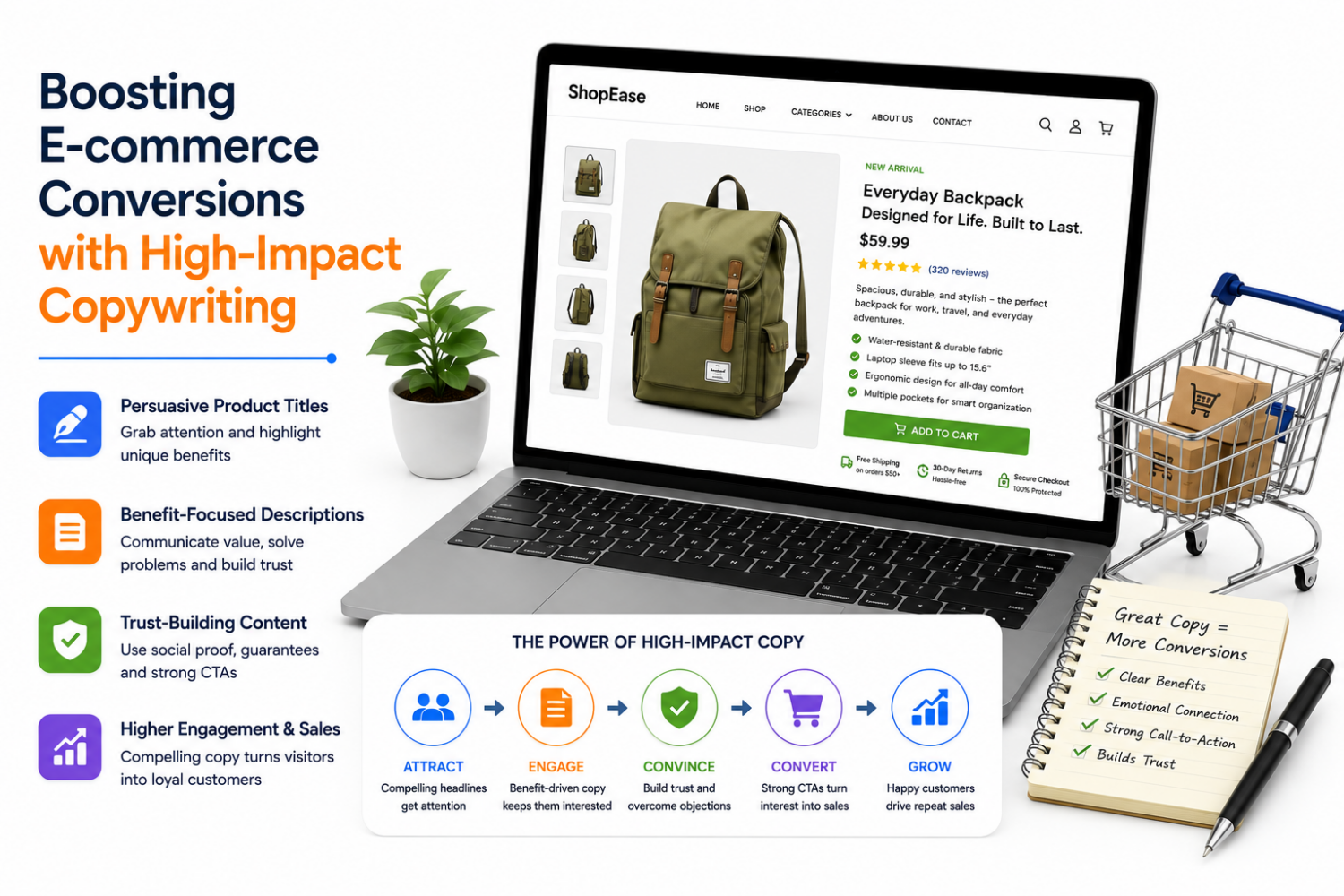
In reality, copywriting is a highly effective way to improve conversion rates. In fact, it isn’t unusual for improving a website’s copy to increase its conversion rates by 2x, 3x, or even 4x. The relationship between copy and conversion rates is direct and obvious, and it’s clear that better copy leads to better conversion rates. The question is, how can you improve your e-commerce copy to increase conversions and drive sales?
Understanding Your Target Audience
To craft high-converting copy, you need to understand your target audience. This involves creating a target customer profile based on your brand’s personas. Nearly all your customers will belong to one or more of these four persona types: the logical, the impulsive, the analytical, and the social. What kind of copy you’ll use for each persona will depend largely on what category the persona falls into.
- To better understand your target audience, you need to create buyer personas that are based on real data and research. This will allow you to tailor your copy to meet the specific needs and desires of each persona.
- Each persona type will respond very differently to your copy. For example, the logical persona will be more interested in features and benefits, while the impulsive persona will be more interested in emotional appeals.
- By understanding your target audience, you can create copy that speaks directly to their needs and desires, increasing the likelihood of conversion.
Crafting Compelling Copy
Crafting compelling copy is key to driving conversions and sales. This involves using power words, action words, and storytelling techniques to create a narrative that resonates with your target audience. Power words evoke strong emotions in your readers and can make your copy stand out from the crowd. Action words, on the other hand, drive readers to take action and can increase conversions.
- Some examples of power words include words like “stunning,” “sensational,” and “impressive.” These words can help to create a strong emotional connection with your target audience and increase the likelihood of conversion.
- Action words, such as “get,” “act,” and “take,” can help to drive readers to take action and increase conversions.
- Storytelling techniques, such as using metaphors and anecdotes, can help to create a narrative that resonates with your target audience and increases the likelihood of conversion.
Best Practices for E-commerce Copywriting
There are several best practices for e-commerce copywriting that can help to increase conversions and drive sales. These include using a clear and concise writing style, avoiding jargon and technical terms, and using social proof to build trust and credibility with your target audience.
- Using a clear and concise writing style can help to make your copy more accessible and easier to read, increasing the likelihood of conversion.
- Avoiding jargon and technical terms can help to build trust and credibility with your target audience, increasing the likelihood of conversion.
- Using social proof, such as customer testimonials and reviews, can help to build trust and credibility with your target audience, increasing the likelihood of conversion.
Measuring the Effectiveness of Your Copy
Measuring the effectiveness of your copy is crucial to determining its impact on conversions and sales. This involves using analytics tools to track key metrics, such as click-through rates, conversion rates, and return on investment (ROI). By analyzing these metrics, you can identify areas for improvement and make data-driven decisions to optimize your copy.
- Using analytics tools, such as Google Analytics, can help to track key metrics and measure the effectiveness of your copy.
- Key metrics to track include click-through rates, conversion rates, and return on investment (ROI).
- By analyzing these metrics, you can identify areas for improvement and make data-driven decisions to optimize your copy.
Conclusion
In conclusion, copywriting is a highly effective way to improve conversion rates and drive sales. By understanding your target audience, crafting compelling copy, and following best practices for e-commerce copywriting, you can create a narrative that resonates with your target audience and increases the likelihood of conversion. Measuring the effectiveness of your copy is crucial to determining its impact on conversions and sales, and using analytics tools can help to track key metrics and make data-driven decisions to optimize your copy.
By following these tips and best practices, you can create a copy that drives conversions and sales, and sets your brand apart from the competition.
Key Takeaways
- Create buyer personas that are based on real data and research to better understand your target audience.
- Use power words, action words, and storytelling techniques to create a narrative that resonates with your target audience.
- Avoid jargon and technical terms to build trust and credibility with your target audience.
- Use social proof to build trust and credibility with your target audience.
- Measure the effectiveness of your copy using analytics tools to track key metrics and make data-driven decisions to optimize your copy.
Frequently Asked Questions (FAQs)
What is the most important aspect of e-commerce copywriting?
The most important aspect of e-commerce copywriting is understanding your target audience and creating a narrative that resonates with them.
How can I measure the effectiveness of my copy?
You can measure the effectiveness of your copy using analytics tools, such as Google Analytics, to track key metrics like click-through rates, conversion rates, and return on investment (ROI).
What are some best practices for e-commerce copywriting?
Some best practices for e-commerce copywriting include using a clear and concise writing style, avoiding jargon and technical terms, and using social proof to build trust and credibility with your target audience.
How can I optimize my copy for better conversions?
You can optimize your copy for better conversions by analyzing data, using A/B testing, and making data-driven decisions to improve your copy.
What is the role of storytelling in e-commerce copywriting?
The role of storytelling in e-commerce copywriting is to create a narrative that resonates with your target audience and increases the likelihood of conversion.