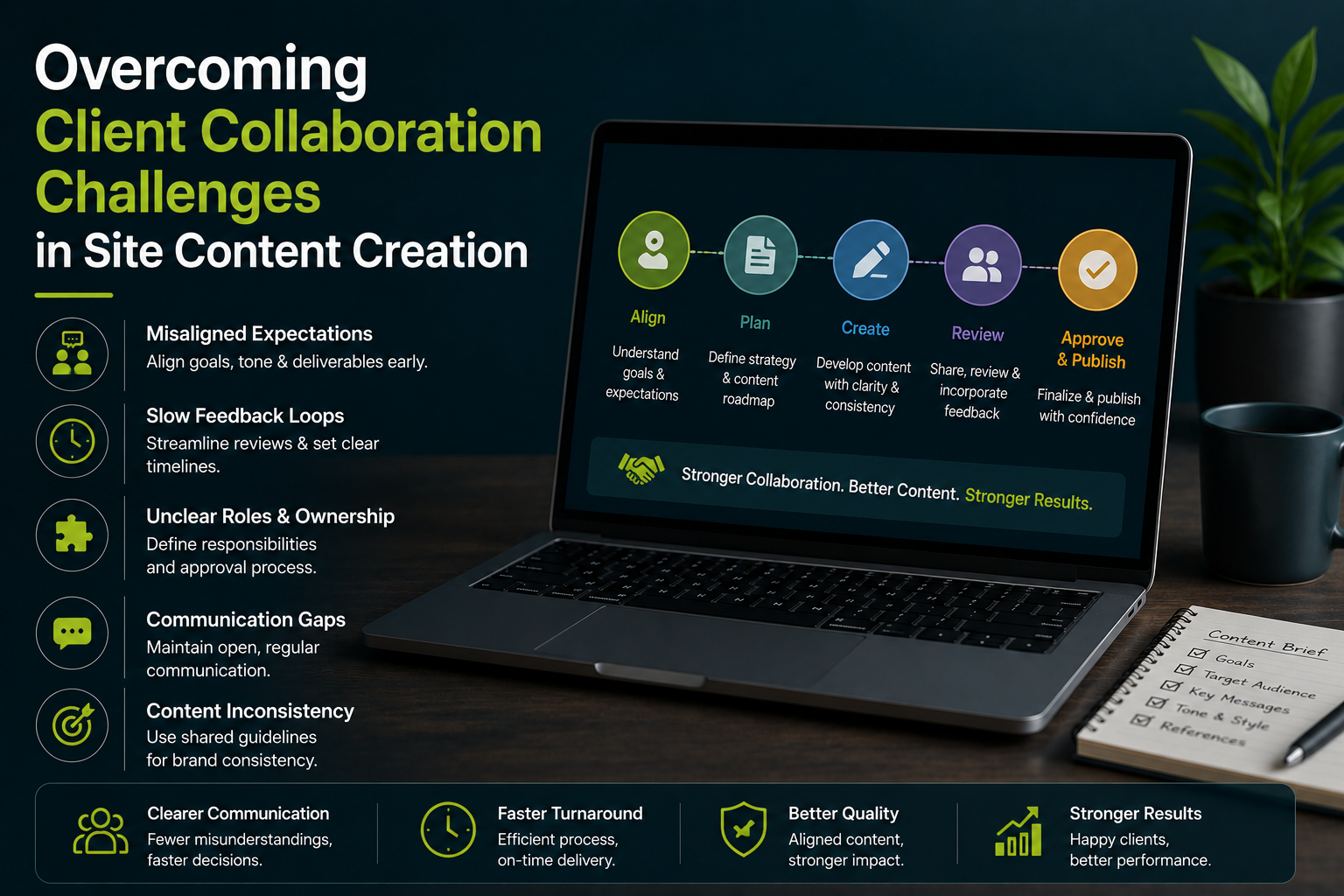
Effective content creation is a delicate dance between meeting client expectations and producing high-quality, engaging content that resonates with target audiences. As a senior SEO content writer for Marastu, a digital marketing agency, I’ve encountered numerous pain points that can hinder this process. In this article, we’ll explore four significant challenges that agencies and freelance copywriters face when creating site content for clients, along with practical suggestions for overcoming these obstacles.
One of the most common pain points is the lack of guidance from clients, particularly in website development projects. Clients often focus on design, leaving writers to fend for themselves with little direction or background information. This can lead to confusion, diluted messaging, and ultimately, subpar content.
Section One: Educating Clients
To alleviate this issue, it’s essential to educate clients on the importance of authoritative, relevant, useful, and engaging content. This can be achieved by explaining the SEO implications of high-quality content and the benefits of resonating with target audiences. By establishing this rationale, you’ll be on solid ground to task clients with providing necessary information and guidance throughout the project.
Tasking Clients with Client-Facing Work
- Assign clients tasks such as providing background information, defining target audiences, and establishing key messaging points. This will not only ensure you have the necessary information but also empower clients to take an active role in the content creation process.
- Encourage clients to review and edit content drafts, providing valuable feedback that can refine and improve the final product.
- Develop a comprehensive content strategy that outlines the scope, goals, and objectives of the project, ensuring everyone involved is on the same page.
Filtering Client Input
While clients may provide valuable input, it’s essential to filter and repackaging this information before passing it on to the writer. This is where the agency’s content manager or editor plays a crucial role in interpreting and prioritizing messaging points, conveying them to the writer in a clear and concise manner.
- Develop a system for capturing and organizing client input, ensuring that all relevant information is preserved and accessible.
- Use this information to create a comprehensive content brief that outlines the project’s goals, objectives, and key messaging points.
- Work closely with the writer to ensure that the final product meets the client’s expectations while maintaining the agency’s high standards for quality and engagement.
Section Two: Balancing Uniqueness and Repetition
Another significant pain point is balancing uniqueness and repetition in messaging. Clients often strive to make site page content as original as possible, but this can lead to inconsistencies and dilution of key messaging. By adopting a user-centric approach, agencies can help clients understand the importance of repetition and consistency in messaging.
Mirroring User Experience
To alleviate this issue, agencies can encourage clients to think of their website as a starting point, rather than a book that readers begin from the beginning. By mirroring the user’s experience, clients can understand the importance of repetition and consistency in messaging, ensuring that key points are emphasized throughout the site.
- Develop a comprehensive content strategy that outlines the site’s key messaging points, emphasizing the importance of repetition and consistency.
- Work closely with the writer to ensure that messaging points are emphasized throughout the site, rather than being relegated to specific pages or sections.
- Use this information to create a comprehensive content brief that outlines the project’s goals, objectives, and key messaging points, ensuring that all stakeholders are on the same page.
Using Messaging Points to Inform Content Creation
By using messaging points to inform content creation, agencies can ensure that key points are emphasized throughout the site, rather than being relegated to specific pages or sections. This can be achieved by working closely with the writer to ensure that messaging points are woven throughout the content, creating a cohesive and engaging narrative.
- Develop a system for capturing and organizing messaging points, ensuring that all relevant information is preserved and accessible.
- Use this information to create a comprehensive content brief that outlines the project’s goals, objectives, and key messaging points, ensuring that all stakeholders are on the same page.
- Work closely with the writer to ensure that messaging points are woven throughout the content, creating a cohesive and engaging narrative.
Section Three: Overcoming Client Involvement
Another significant pain point is client involvement, particularly when it comes to providing detailed input and feedback. While clients may have valuable insights, excessive involvement can stifle the creative process, leading to watered-down content and reduced messaging.
Filtering Client Input
By filtering client input and providing a clear and concise overview of key messaging points, agencies can ensure that the writer has a clear understanding of the project’s goals and objectives.
- Develop a system for capturing and organizing client input, ensuring that all relevant information is preserved and accessible.
- Use this information to create a comprehensive content brief that outlines the project’s goals, objectives, and key messaging points, ensuring that all stakeholders are on the same page.
- Work closely with the writer to ensure that the final product meets the client’s expectations while maintaining the agency’s high standards for quality and engagement.
Assigning Client-Facing Work
By assigning client-facing work, such as reviewing and editing content drafts, agencies can empower clients to take an active role in the content creation process, while also ensuring that the final product meets their expectations.
- Develop a system for assigning client-facing work, ensuring that all relevant tasks are clearly outlined and communicated to the client.
- Work closely with the client to ensure that they understand their role in the content creation process and are empowered to provide valuable feedback.
- Use this information to create a comprehensive content brief that outlines the project’s goals, objectives, and key messaging points, ensuring that all stakeholders are on the same page.
Conclusion
Effective content creation is a delicate dance between meeting client expectations and producing high-quality, engaging content that resonates with target audiences. By understanding the pain points that agencies and freelance copywriters face, we can develop practical solutions that alleviate these issues and create content that truly resonates with our clients’ target audiences.
By educating clients, filtering client input, mirroring user experience, and using messaging points to inform content creation, agencies can overcome common pain points and create content that truly resonates with target audiences.
Conclusion paragraph two: By empowering clients to take an active role in the content creation process and providing clear and concise guidance, agencies can ensure that the final product meets the client’s expectations while maintaining the agency’s high standards for quality and engagement.
Key Takeaways
- Effective content creation is a delicate dance between meeting client expectations and producing high-quality, engaging content that resonates with target audiences.
- Agencies and freelance copywriters face numerous pain points when creating site content for clients, including a lack of guidance, excessive client involvement, and balancing uniqueness and repetition in messaging.
- Practical solutions can alleviate these pain points, including educating clients, filtering client input, mirroring user experience, and using messaging points to inform content creation.
- By empowering clients to take an active role in the content creation process and providing clear and concise guidance, agencies can ensure that the final product meets the client’s expectations while maintaining the agency’s high standards for quality and engagement.
- Effective content creation requires a comprehensive content strategy that outlines the site’s key messaging points, emphasizing the importance of repetition and consistency.
- Agencies can use messaging points to inform content creation, ensuring that key points are emphasized throughout the site, rather than being relegated to specific pages or sections.
Frequently Asked Questions (FAQs)
What are the common pain points in content creation?
A common pain point in content creation is a lack of guidance from clients, particularly in website development projects. Clients often focus on design, leaving writers to fend for themselves with little direction or background information.
How can agencies alleviate these pain points?
Agencies can alleviate these pain points by educating clients on the importance of authoritative, relevant, useful, and engaging content. This can be achieved by explaining the SEO implications of high-quality content and the benefits of resonating with target audiences.
What role do messaging points play in content creation?
Messaging points play a crucial role in content creation, as they provide a clear and concise overview of the site’s key messaging points. By using messaging points to inform content creation, agencies can ensure that key points are emphasized throughout the site, rather than being relegated to specific pages or sections.
How can agencies empower clients to take an active role in the content creation process?
Agencies can empower clients to take an active role in the content creation process by assigning client-facing work, such as reviewing and editing content drafts. This will not only ensure that the client is involved in the process but also provide valuable feedback that can refine and improve the final product.
What are the benefits of adopting a user-centric approach in content creation?
The benefits of adopting a user-centric approach in content creation include creating content that truly resonates with target audiences, improving engagement and conversion rates, and ensuring that the final product meets the client’s expectations while maintaining the agency’s high standards for quality and engagement.