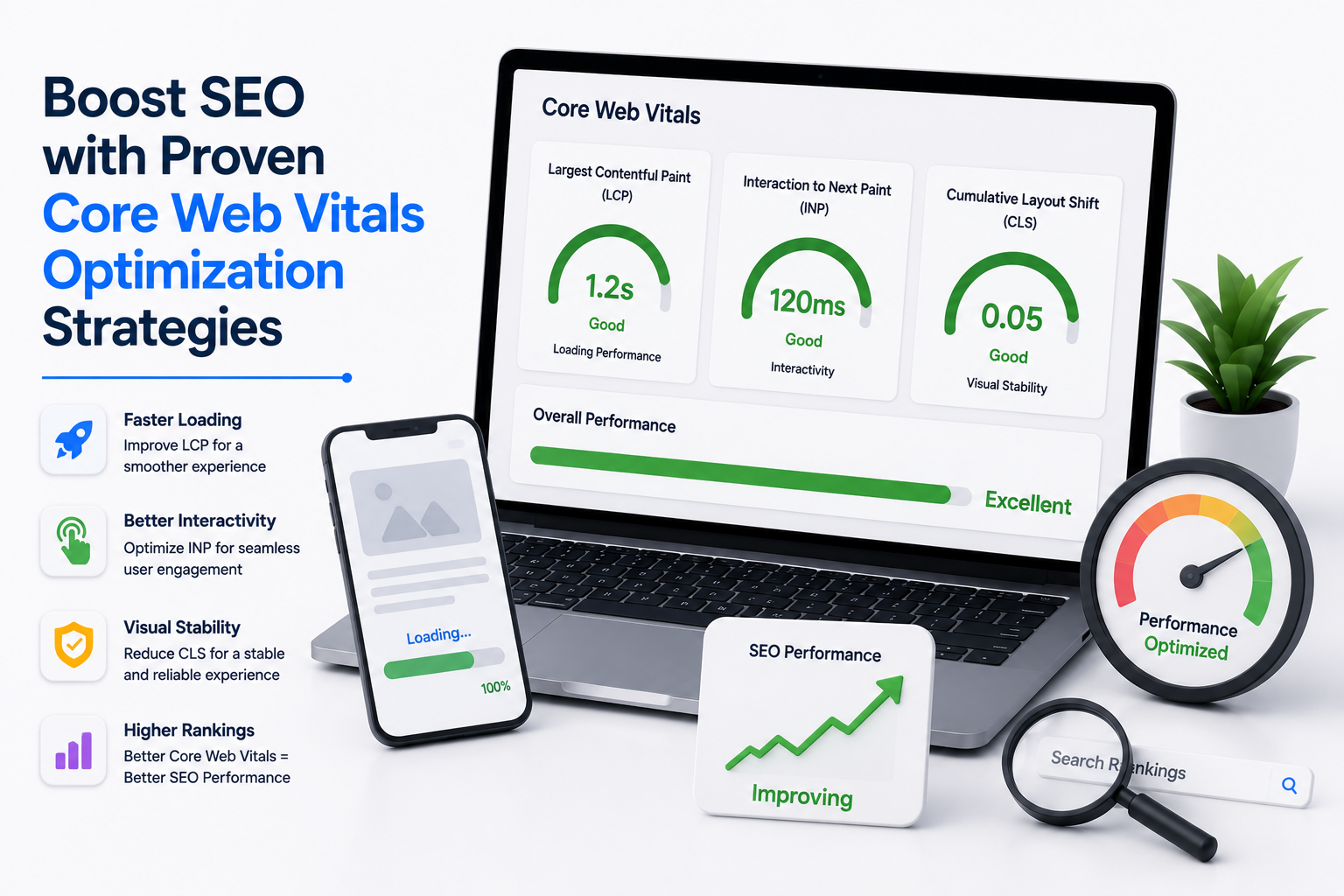
When it comes to search engine optimization (SEO), there are many factors to consider, from keyword optimization to mobile experience and backlinks. However, one often-overlooked aspect is on-page experience. Google pays close attention to how users interact with a website, and Core Web Vitals are a set of signals that assess a website’s user experience by measuring loading performance, responsiveness to interactions, and visual stability. In this article, we’ll delve into what Core Web Vitals are, why they matter, and how you can optimize your website for better user experience and improved search engine rankings.
What are Core Web Vitals?
Core Web Vitals are a set of metrics that determine the quality of the performance visitors experience when they land on your page. They measure three key aspects of user experience: loading performance, responsiveness to interactions, and visual stability. By optimizing your website for these metrics, you can potentially have a big impact on your SEO rankings and your business. For example, having to wait for a page to load is a prime example of a less-than-ideal user experience. Google is paying attention to this because they realize it’s causing a lot of people to bounce.
One of the most important Core Web Vitals is Largest Contentful Paint (LCP), which measures the time it takes for the main content of a page to load. The general benchmark for LCP is 2.5 seconds. Improving LCP is crucial for optimizing Core Web Vitals, as it directly impacts how quickly a page’s main content is visible to users. By optimizing your website for LCP, you can improve the user experience and increase the chances of keeping visitors engaged.
Largest Contentful Paint (LCP)
LCP measures the time it takes for the main content of a page to load. This includes images, text, and other visual elements. A good LCP score is essential for providing a smooth user experience. To optimize LCP, you can use techniques such as image compression, code splitting, and lazy loading. By reducing the size of your website and improving its loading speed, you can improve the user experience and increase the chances of keeping visitors engaged.
- Use image compression tools to reduce the size of your images and improve page loading speed.
- Implement code splitting to reduce the amount of code that needs to be loaded on each page.
- Use lazy loading to load images and other visual elements only when they are needed.
Interaction to Next Paint (INP)
Interaction to Next Paint (INP) measures the time it takes for a page to respond after a user interacts with it. This includes clicks, scrolls, and other user interactions. A good INP score is essential for providing a smooth user experience. To optimize INP, you can use techniques such as reducing the amount of JavaScript on your website and improving the performance of your website’s layout.
- Reduce the amount of JavaScript on your website to improve page loading speed and responsiveness.
- Improve the performance of your website’s layout by using techniques such as CSS grid and flexbox.
- Use techniques such as preloading and prefetching to improve page loading speed and responsiveness.
Cumulative Layout Shift (CLS)
Cumulative Layout Shift (CLS) measures the frequency of unexpected layout changes and a web page’s overall visual stability. A good CLS score is essential for providing a smooth user experience. To optimize CLS, you can use techniques such as using a consistent layout and avoiding unexpected layout changes.
One of the best ways to optimize CLS is by using a consistent layout throughout your website. This means using the same layout and design elements on every page, rather than using different layouts and designs for different pages. By using a consistent layout, you can improve the user experience and reduce the likelihood of unexpected layout changes.
Optimizing CLS
Optimizing CLS requires a combination of techniques, including using a consistent layout, avoiding unexpected layout changes, and using techniques such as layout shifting and layout thrashing. By optimizing CLS, you can improve the user experience and reduce the likelihood of users abandoning your website due to a poor user experience.
- Use a consistent layout throughout your website to improve the user experience.
- Avoid using unexpected layout changes, such as layout shifting and layout thrashing.
- Use techniques such as layout shifting and layout thrashing to improve page loading speed and responsiveness.
Conclusion
Core Web Vitals are a set of metrics that determine the quality of the performance visitors experience when they land on your page. By optimizing your website for these metrics, you can improve the user experience and increase the chances of keeping visitors engaged. In this article, we’ve discussed the importance of Core Web Vitals and provided tips and techniques for optimizing your website for better user experience and improved search engine rankings.
By following the tips and techniques outlined in this article, you can improve the user experience on your website and increase the chances of keeping visitors engaged. Remember, a good user experience is essential for providing a positive first impression and increasing the chances of converting visitors into customers.
Key Takeaways
- Core Web Vitals are a set of metrics that determine the quality of the performance visitors experience when they land on your page.
- Optimizing your website for Core Web Vitals can improve the user experience and increase the chances of keeping visitors engaged.
- Use techniques such as image compression, code splitting, and lazy loading to improve page loading speed and responsiveness.
- Use techniques such as reducing the amount of JavaScript on your website and improving the performance of your website’s layout to improve page loading speed and responsiveness.
- Use a consistent layout throughout your website to improve the user experience.
Frequently Asked Questions (FAQs)
What are Core Web Vitals?
Core Web Vitals are a set of metrics that determine the quality of the performance visitors experience when they land on your page.
How can I optimize my website for Core Web Vitals?
Use techniques such as image compression, code splitting, and lazy loading to improve page loading speed and responsiveness.
What is the importance of Largest Contentful Paint (LCP)?
LCP measures the time it takes for the main content of a page to load. A good LCP score is essential for providing a smooth user experience.
What is the importance of Interaction to Next Paint (INP)?
INP measures the time it takes for a page to respond after a user interacts with it. A good INP score is essential for providing a smooth user experience.
What is the importance of Cumulative Layout Shift (CLS)?
CSS measures the frequency of unexpected layout changes and a web page’s overall visual stability. A good CLS score is essential for providing a smooth user experience.