When it comes to search engine optimization (SEO), understanding the intent behind a person’s search query is crucial for marketers to tailor their content and enhance their chances of higher rankings and increased engagement. Keyword intent, also known as search intent or user intent, refers to the goal behind a person’s search query. Understanding this intent helps marketers create content that matches user expectations, which can lead to increased conversions and return on investment (ROI). For instance, someone searching for “how to fix a leaky faucet” is likely looking for DIY tips, whereas someone searching for “plumber near me” suggests they want to hire a professional. This understanding of keyword intent is essential for both organic traffic and pay-per-click (PPC) campaigns.
Conversion rate optimization (CRO) is a crucial aspect of SEO, as it involves increasing the percentage of users who perform a desired action on a website. Desired actions, also called conversions, can include purchasing a product, clicking ‘add to cart,’ or filling out a form. By understanding keyword intent and matching it with the content on their website, marketers can increase the chances of converting users into customers. In PPC, it’s a more targeted approach, focusing on high-intent keywords to achieve a significant return on investment (ROI). In SEO, it’s not so different in theory, as Google aims to provide users with the best results to keep them engaged and satisfied.
Understanding Keyword Intent
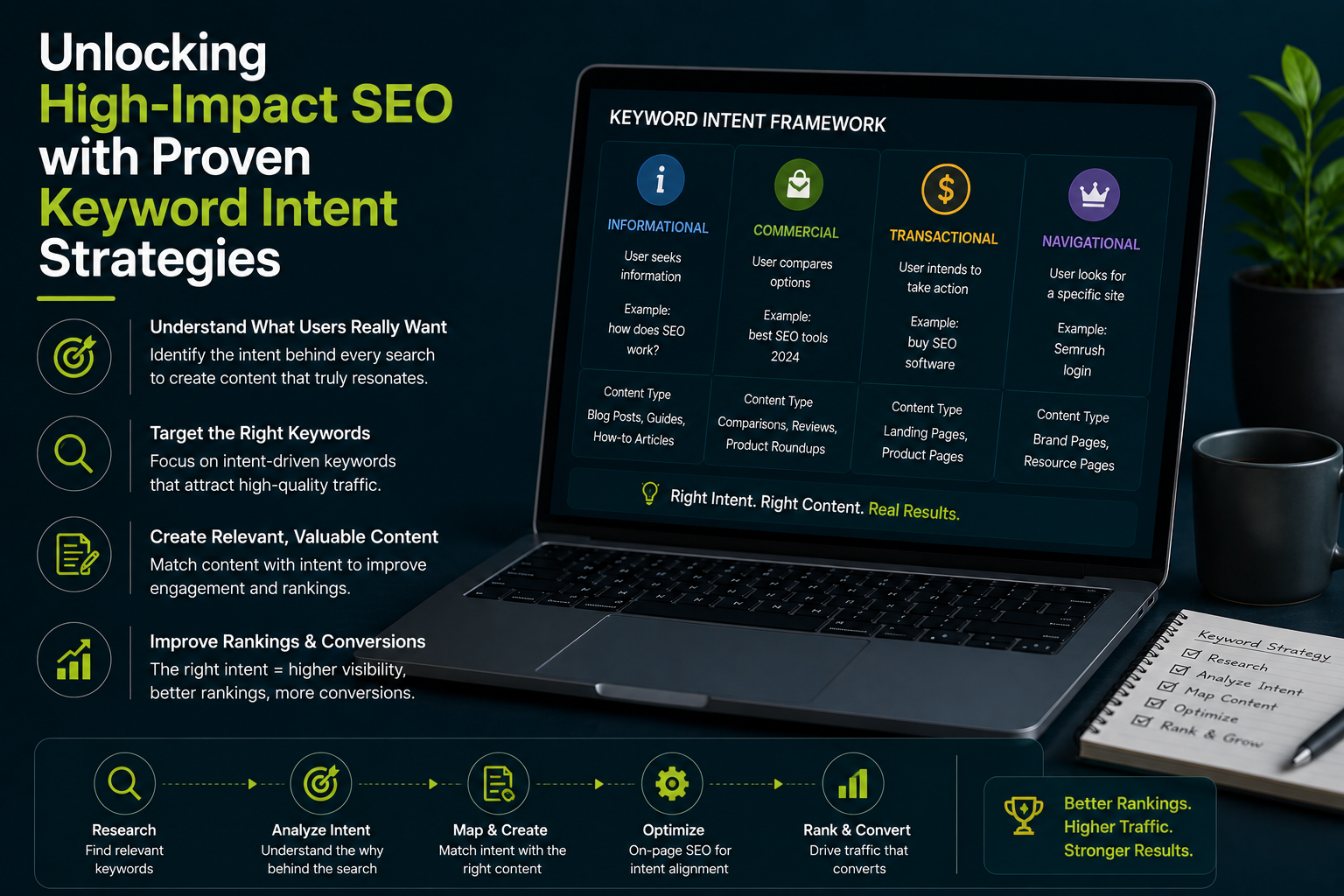
There are four primary types of keyword intent: informational, commercial, transactional, and navigational. Users with informational intent are looking for knowledge or answers, such as how-to guides, explanations, or definitions. They might search for questions like “what is SEO?” or “how does Google rank websites?” On the other hand, users with commercial intent are looking for products or services to buy, such as “best SEO tools” or “affordable web hosting.” Transactional intent is similar, but it involves searching for specific products or services to purchase, such as “buy SEO software” or “hire a web developer.” Navigational intent, finally, involves searching for a specific website or brand, such as “Facebook login” or “Amazon customer service.”
Identifying Keyword Intent
To identify keyword intent, marketers need to analyze the search query and understand the user’s goal. This can be done by using tools like Google Keyword Planner, , or SEMrush. These tools provide insights into the search volume, competition, and intent behind the keyword. For instance, if a keyword has a high search volume and low competition, it’s likely informational or commercial intent. On the other hand, if a keyword has a low search volume and high competition, it’s likely transactional or navigational intent.
- Use tools like Google Keyword Planner, , or SEMrush to analyze the search query and understand the user’s goal.
- Analyze the search volume, competition, and intent behind the keyword to identify its type.
- Use long-tail keywords to target specific intent, such as “best SEO tools for small businesses” or “affordable web hosting for e-commerce websites.”
Matching Keyword Intent with Content
Once marketers have identified the keyword intent, they need to create content that matches the user’s goal. This involves creating high-quality, relevant, and informative content that addresses the user’s question or need. For instance, if a user searches for “how to fix a leaky faucet,” the content should provide step-by-step instructions on how to fix it. If a user searches for “best SEO tools,” the content should provide a list of the top SEO tools and their features. By matching keyword intent with content, marketers can increase the chances of converting users into customers.
- Use keyword research tools to identify the intent behind the keyword.
- Create high-quality, relevant, and informative content that addresses the user’s question or need.
- Use long-tail keywords to target specific intent and increase the chances of converting users into customers.
Conversion Rate Optimization (CRO)
Conversion rate optimization (CRO) is the practice of increasing the percentage of users who perform a desired action on a website. Desired actions, also called conversions, can include purchasing a product, clicking ‘add to cart,’ or filling out a form. By understanding keyword intent and matching it with the content on their website, marketers can increase the chances of converting users into customers. In PPC, it’s a more targeted approach, focusing on high-intent keywords to achieve a significant return on investment (ROI). In SEO, it’s not so different in theory, as Google aims to provide users with the best results to keep them engaged and satisfied.
Tracking Conversions
To track conversions, marketers need to set up goals and tracking in their analytics tool. This involves setting up conversion tracking pixels, Google Analytics, or other tracking tools to monitor the desired actions on their website. By tracking conversions, marketers can identify areas for improvement and optimize their content and user experience to increase conversions. For instance, if a marketer finds that users are abandoning their shopping cart, they can optimize the checkout process to make it easier and faster.
- Set up goals and tracking in your analytics tool to monitor desired actions on your website.
- Use conversion tracking pixels, Google Analytics, or other tracking tools to track conversions.
- Optimize your content and user experience to increase conversions and improve the overall user experience.
Organic Search and Conversion Rates
Organic search and conversion rates are closely related. When users search for a keyword on Google, they’re likely looking for a specific answer or solution. By creating high-quality, relevant, and informative content that matches the user’s intent, marketers can increase the chances of converting users into customers. According to Ruler Analytics, the average conversion rate across 14 industries is 2.7%. However, conversion rates can vary significantly depending on the industry, with some industries having higher conversion rates and others having lower conversion rates.
Industry-Specific Conversion Rates
Conversion rates can vary significantly depending on the industry. For instance, the financial services industry has a conversion rate of 3.4%, while the travel industry has a conversion rate of 1.8%. By understanding the industry-specific conversion rates, marketers can optimize their content and user experience to increase conversions and improve the overall user experience. For instance, if a marketer finds that users in the financial services industry are more likely to convert, they can optimize their content and user experience to better serve that audience.
- Understand the industry-specific conversion rates to optimize your content and user experience.
- Use industry-specific data to inform your content and user experience decisions.
- Optimize your content and user experience to increase conversions and improve the overall user experience.
Conclusion
In conclusion, understanding keyword intent is crucial for marketers to create content that matches the user’s goal and increases the chances of converting users into customers. By identifying keyword intent, matching it with content, and optimizing the user experience, marketers can improve conversion rates and increase ROI. Additionally, understanding industry-specific conversion rates can help marketers optimize their content and user experience to better serve their target audience. By following these best practices, marketers can improve their SEO and CRO efforts and drive more conversions and revenue for their business.
By understanding keyword intent and matching it with content, marketers can improve their SEO and CRO efforts and drive more conversions and revenue for their business. Whether you’re a seasoned marketer or just starting out, understanding keyword intent is a crucial step in creating high-quality, relevant, and informative content that addresses the user’s question or need. By following these best practices, you can improve your SEO and CRO efforts and drive more conversions and revenue for your business.
Key Takeaways
- Understanding keyword intent is crucial for marketers to create content that matches the user’s goal and increases the chances of converting users into customers.
- Identify keyword intent using tools like Google Keyword Planner, , or SEMrush.
- Match keyword intent with content to increase conversions and improve the overall user experience.
- Understand industry-specific conversion rates to optimize your content and user experience.
- Optimize your content and user experience to increase conversions and improve the overall user experience.
Frequently Asked Questions (FAQs)
What is keyword intent?
Keyword intent refers to the goal behind a person’s search query. It can be informational, commercial, transactional, or navigational.
How do I identify keyword intent?
You can identify keyword intent using tools like Google Keyword Planner, , or SEMrush. These tools provide insights into the search volume, competition, and intent behind the keyword.
What is the average conversion rate across industries?
According to Ruler Analytics, the average conversion rate across 14 industries is 2.7%.
How can I optimize my content and user experience to increase conversions?
You can optimize your content and user experience by understanding keyword intent, matching it with content, and using industry-specific data to inform your decisions.
What is the importance of understanding industry-specific conversion rates?
Understanding industry-specific conversion rates is important because it can help you optimize your content and user experience to better serve your target audience.